
JWST's new findings on the pink GJ 504B exoplanet
SMRTR summary
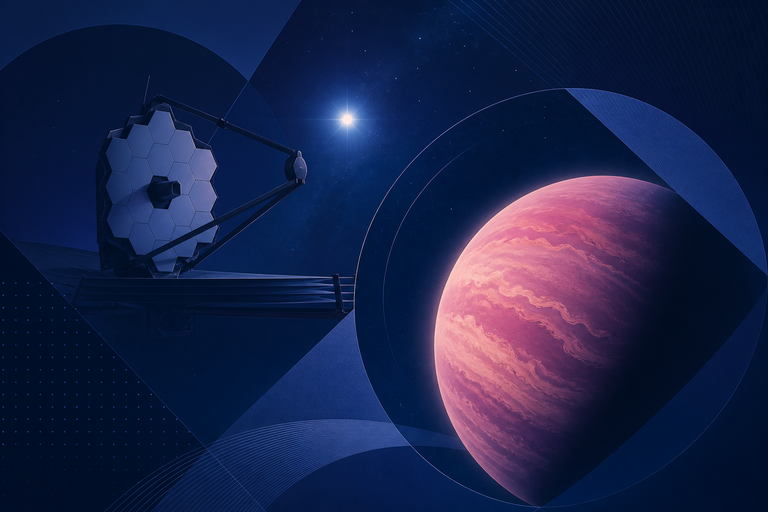
Fifty-seven light years away, a glowing magenta planet is rewriting what astronomers thought they knew about the cosmos. GJ 504b, a stunning pink world orbiting a star in the Virgo constellation, has long captivated scientists since its discovery in 2011. But new findings from the James Webb Space Telescope, published in June 2026, have turned everything upside down.
Researchers at Northwestern University discovered the planet is not the 160-million-year-old system astronomers assumed. It's actually 4 billion years old, which changes its mass estimates dramatically, from 4 times Jupiter's mass to a staggering 25 times.
That creates a genuine identity crisis. At 25 Jupiter masses, it technically qualifies as a brown dwarf, a failed star. But its atmosphere and orbital behavior suggest it formed like a planet, from a protoplanetary disk.
Scientists have diplomatically settled on calling it a "planetary mass companion," a placeholder for something our understanding of the universe simply isn't yet equipped to explain.
SMRTR provides this summary for quick context. The original article belongs to Hacker News.
Read the original article