
How JavaScript learned to cheat — A Deep Dive into the JS Engine
SMRTR summary
Every time you hit play on a video or scroll through a website, a quietly remarkable piece of software springs into action. JavaScript, the language powering nearly every browser on earth, runs through an engine so sophisticated it almost thinks for itself.
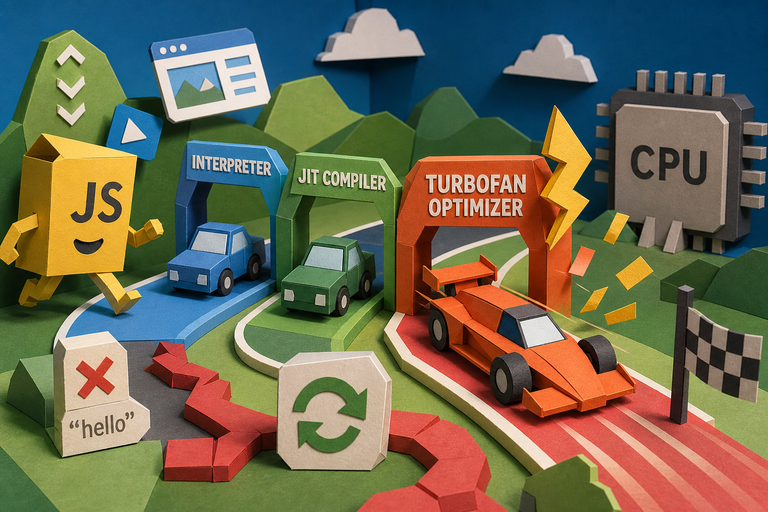
Modern engines like Chrome's V8 don't simply read your code line by line. They watch it, learn from it, and make educated bets. Functions called thousands of times get compiled into lightning-fast machine code. When those bets are wrong, the engine retreats, recalibrates, and tries again.
This process, called Just-In-Time compilation, moves through multiple tiers, from a basic interpreter to a heavy-hitting optimizer called TurboFan, which can strip out safety checks and wire variables directly to CPU registers.
The catch? Inconsistency breaks everything. Feed a function numbers, then suddenly strings, and the engine throws out its optimized code entirely and starts over.
What began as a ten-day prototype in 1995 now runs on virtually every internet-connected device on the planet.
SMRTR provides this summary for quick context. The original article belongs to Daily.dev.
Read the original article