
Why Your Brain (and AI) Must First «Experience» an Event to Comprehend It
SMRTR summary
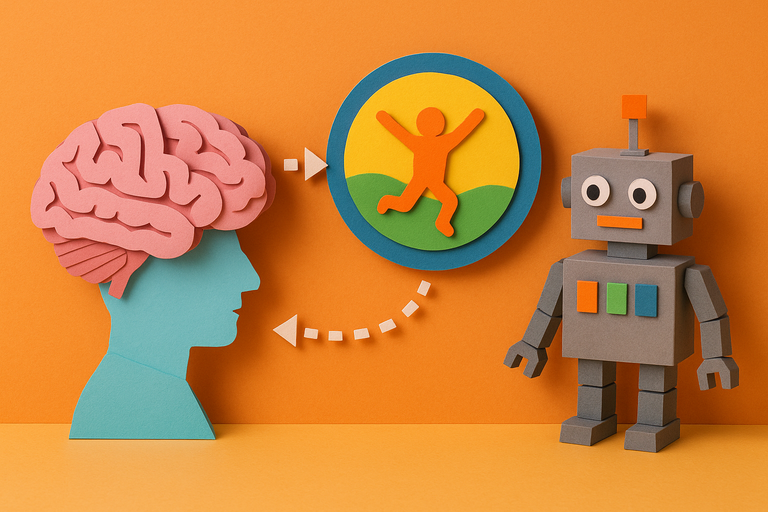
A groundbreaking hypothesis challenges our understanding of artificial intelligence. While modern language models like GPT-4 and Claude 3 dazzle with their abilities, they lack a crucial element: the capacity to truly experience and understand their own outputs.
"We're hitting an invisible wall," explains AI researcher Kamil Gadeev. His "VORTEX Protocol" proposes that genuine thinking requires an architectural mechanism for "experiencing" - a way to index and integrate new information into a coherent internal world model.
Without this, AI remains a "philosophical zombie" - brilliantly imitating thought, but internally blind to the meaning of its own calculations.
Gadeev argues that consciousness isn't just a byproduct, but a necessary functional element for thinking. This shift in perspective could revolutionize AI development, moving from "neural network responders" to "cognitive architecture integrators."
As we push the boundaries of machine intelligence, the question becomes not whether machines will think, but how to create an architecture where genuine thinking - and experiencing - becomes possible.
SMRTR provides this summary for quick context. The original article belongs to Daily.dev.
Read the original article