
What's the deal with Physical AI? Why the next frontier of tech is already all around you
SMRTR summary
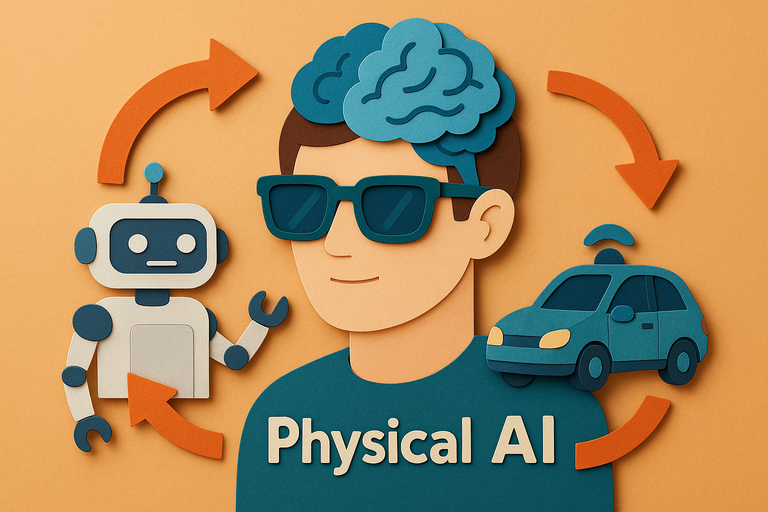
Smart glasses perched on your nose might seem like simple tech accessories, but they're actually serving as the early ambassadors of what industry leaders are calling "physical AI" — artificial intelligence that can perceive and act in the real world rather than just chat on your laptop screen.
At the Consumer Electronics Show last week, companies including Nvidia unveiled technology that moves AI beyond chatbots into robots and devices that can reason about their environment. "The ChatGPT moment for physical AI is here — when machines begin to understand, reason, and act in the real world," Nvidia CEO Jensen Huang declared during his keynote.
The breakthrough isn't just about smarter robots. Your smart glasses are quietly collecting real-world data every time you wear them, creating a treasure trove of human perspective that could train future autonomous systems.
"Smartglasses are the best representation already of physical AI," explains Qualcomm's Ziad Asghar. "They are a device that basically are present and are able to see what you are seeing."
This creates what experts call a symbiotic relationship — wearables learn from humans while feeding that knowledge back to train increasingly sophisticated robots and autonomous vehicles.
SMRTR provides this summary for quick context. The original article belongs to ZDNet.
Read the original article