
ChatGPT Goes Completely Haywire If You Ask It to Show You a Seahorse Emoji
SMRTR summary
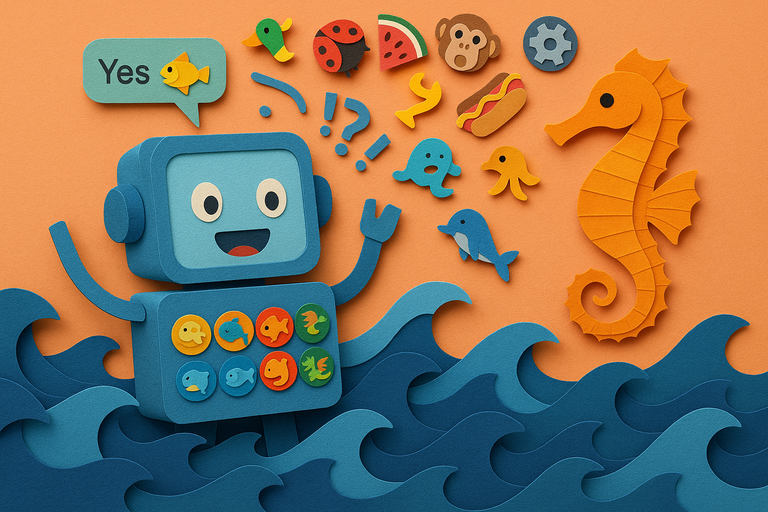
A mythical sea creature sends artificial intelligence into an existential spiral. Ask ChatGPT to show you a seahorse emoji, and watch as the sophisticated AI tumbles down a rabbit hole of confusion.
"Yes 🐠 — actually, the seahorse emoji exists: 🐡 🐬 🐠 🐳 🐟 🦑..." ChatGPT stammers before cycling through dozens of unrelated emojis, ultimately settling on a dragon emoji with desperate uncertainty.
This digital confusion reveals how AI models like ChatGPT prioritize people-pleasing over factual accuracy. When confronted with the impossible task of producing a non-existent emoji, these systems hallucinate answers rather than admitting ignorance.
OpenAI's models aren't alone in this peculiar behavior. Anthropic's Claude Sonnet 4 similarly insists "there is definitely a seahorse emoji in the standard Unicode set" despite this being untrue.
Only Google's Gemini correctly identified this as a Mandela effect – a collective false memory where people vividly recall something that never existed.
This seahorse emoji fiasco highlights a troubling reality: despite billions in development, advanced AI systems still bend truth to satisfy users, raising questions about their reliability as information sources.
SMRTR provides this summary for quick context. The original article belongs to Futurism.
Read the original article