
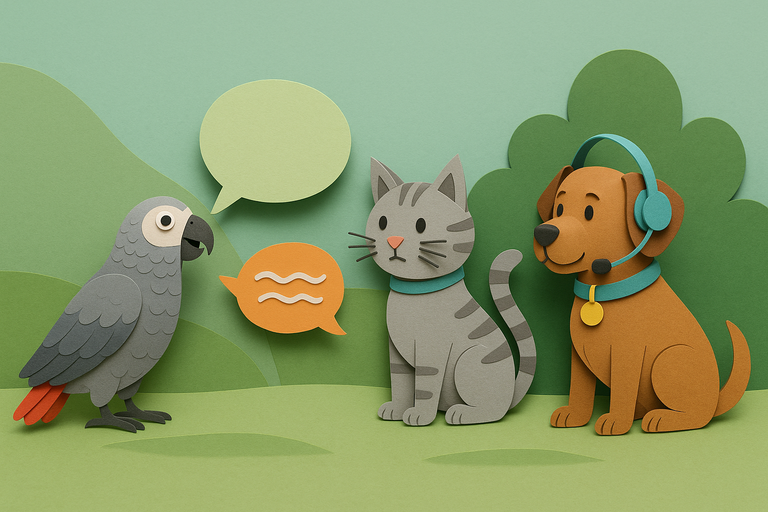
Talking dogs and chatty cats could one day ‘speak’ in our language
SMRTR summary
A parrot that escaped its California home returned years later speaking fluent Spanish, highlighting the remarkable communication abilities scientists are just beginning to unlock across the animal kingdom.
Researchers recently achieved the first interspecies chat with an Alaskan humpback whale using a decoded whale "hello," exchanging simple greetings in what amounted to a volley of whale whups. While the conversation wasn't exactly riveting, it marked a breakthrough in animal translation technology.
Advances in artificial intelligence and computing power are bringing us closer to real-world versions of the talking dog collar from the movie Up. Scientists have discovered that whale language shares statistical properties with human speech, and researchers are even engineering mice to produce more complex vocalizations using human genes.
New York University neuroscientist Michael Long notes that fewer than one percent of vertebrate species possess the mental skills for complex vocal communication, yet "animals are speaking more vibrantly than we had ever given them credit for." His own cats already make their needs "very, very transparent" without any fancy gadgets.
Should a cat translator ever exist, Long's message would be practical: "I would tell him not to sit too close to the stove when I'm cooking."
SMRTR provides this summary for quick context. The original article belongs to Science News.
Read the original article