
SpaceX says a near-collision with Chinese satellite shows how crowded orbit has become
SMRTR summary
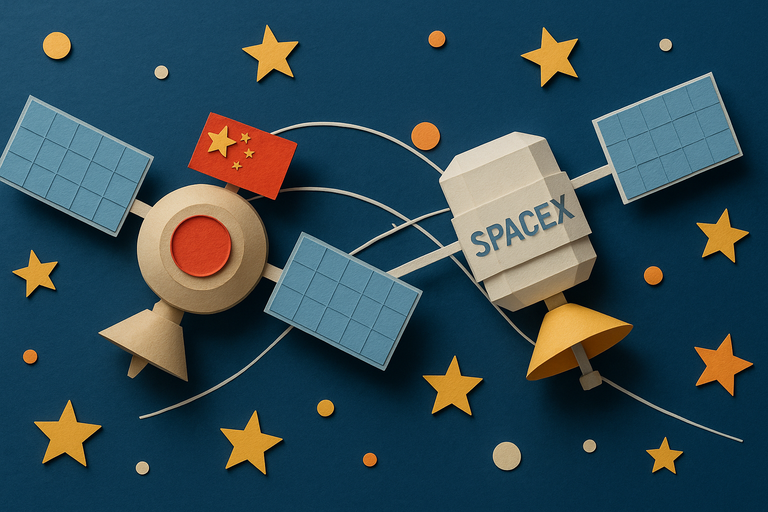
Two hundred meters. That's all that separated a Chinese satellite from a SpaceX Starlink craft as they hurtled through space at thousands of miles per hour over the eastern Pacific Ocean last week. The hair-raising near-miss occurred when nine satellites launched from China's Gobi Desert apparently flew without coordinating their trajectories with existing spacecraft in orbit.
Michael Nicolls, a SpaceX Starlink engineering vice president, didn't mince words about the December 12 incident: "Most of the risk of operating in space comes from the lack of coordination between satellite operators – this needs to change."
The close call highlights a growing challenge as Earth's orbital neighborhood becomes increasingly crowded. Today, roughly 13,000 satellites circle our planet, nearly four times the number from just five years ago. SpaceX alone operates about 9,300 of them.
CAS Space, the Chinese company behind the launch, acknowledged the incident and called for "re-establishing collaborations between the two New Space ecosystems." The company noted the near-collision happened 48 hours after their satellites deployed, well after their launch mission had concluded.
SMRTR provides this summary for quick context. The original article belongs to TechSpot.
Read the original article