
Solar panels in space ‘could provide 80% of Europe’s renewable energy by 2050’
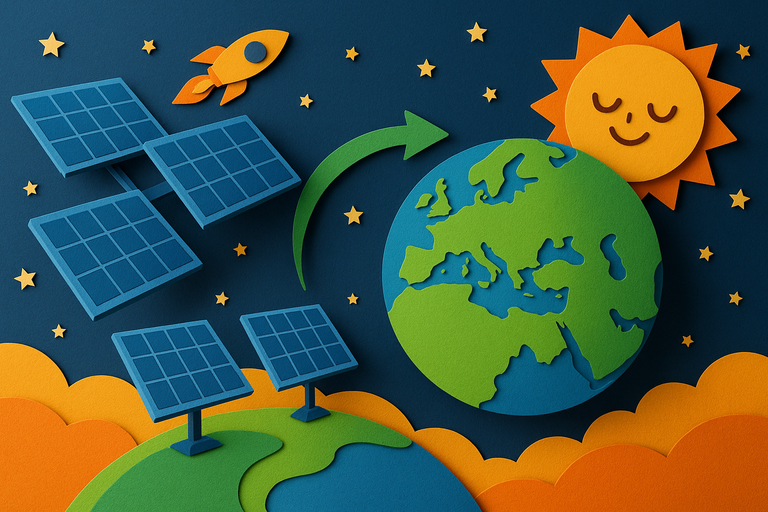
SMRTR summary
A vision of solar panels floating in space could dramatically reduce Europe's terrestrial energy footprint, according to groundbreaking research from King's College London.
The study reveals that space-based solar power systems could slash Europe's land-based renewable energy needs by a staggering 80% by mid-century, while cutting overall power system costs by 15%.
"Renewable energy to replace fossil fuels is the most important action we are taking as humans. Space-based solar power is a potential technology and can provide continuous solar power as a renewable energy source," explains Dr. Wei He, the study's lead author.
Unlike weather-dependent terrestrial renewables, these orbital panels would collect sunlight continuously above the atmosphere, beaming gigawatt-scale power back to Earth.
The researchers' computer model spanning 33 European countries suggests space-based systems could reduce battery storage needs by more than two-thirds.
While challenges remain, including orbital congestion and high initial costs, Dr. Wei believes the time for action is now. Japan has already incorporated space solar into its net-zero strategy, and Europe, with its history of cross-border cooperation, could be next.
SMRTR provides this summary for quick context. The original article belongs to The Guardian.
Read the original article