Proposed spacecraft could carry up to 2,400 people on a one-way trip to the nearest star system, Alpha Centauri
SMRTR summary
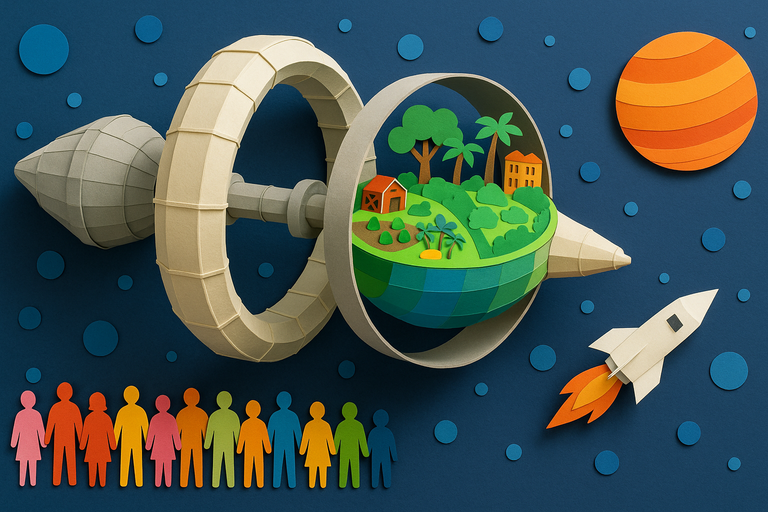
A spinning, 36-mile-long spacecraft could one day carry thousands of passengers on a multi-generational journey to our nearest stellar neighbor. The "Chrysalis," recently awarded first place in the Project Hyperion Design Competition, presents a bold vision for transporting up to 2,400 people to Alpha Centauri, some 25 trillion miles away.
Before launch, potential travelers would spend decades adapting to isolated living conditions in Antarctica. Once underway, the 400-year voyage would unfold within the ship's nested shell design, featuring dedicated zones for everything from tropical forests to manufacturing facilities.
The spacecraft's carefully planned ecosystem would include farms raising plants, fungi, and livestock to sustain its optimal population of about 1,500 people. Many passengers would know only life aboard the vessel, with births carefully planned to maintain sustainability.
While technology for such a journey remains theoretical—commercial nuclear fusion reactors don't yet exist—the design impressed judges with its "system-level coherence" and "overall depth of detail."
The winning engineering team received $5,000 for their hypothetical blueprint that could someday transport humanity to Proxima Centauri b, an Earth-sized exoplanet considered potentially habitable.
SMRTR provides this summary for quick context. The original article belongs to Live Science.
Read the original article