
NASA’s Perseverance Rover completes its first AI-planned drive
SMRTR summary
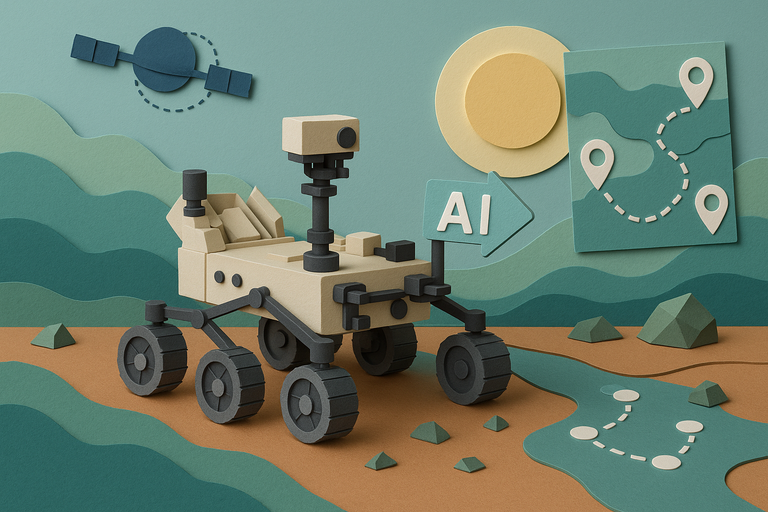
On a cold December morning on Mars, NASA's Perseverance rover made history by driving 689 feet using waypoints planned entirely by artificial intelligence rather than human operators. For 28 years, human "drivers" have meticulously plotted routes for Mars rovers by analyzing terrain data and sketching paths with waypoints spaced no more than 330 feet apart. But this breakthrough demonstration used vision-language models to analyze high-resolution orbital imagery and generate driving commands, which were then verified through more than 500,000 telemetry variables before being transmitted across 140 million miles of space.
"This demonstration shows how far our capabilities have advanced and broadens how we will explore other worlds," said NASA Administrator Jared Isaacman. The AI successfully identified critical terrain features like boulder fields and bedrock outcrops, creating safe navigation paths for two separate drives totaling over 1,400 feet.
This technology could revolutionize space exploration by enabling rovers to handle kilometer-scale autonomous drives while reducing the workload on Earth-based operators. As NASA envisions permanent human presence on the Moon and Mars, such intelligent systems represent crucial infrastructure for future missions.
SMRTR provides this summary for quick context. The original article belongs to Robot Report.
Read the original article