
Mouse ear regrown using genetic switch, raising hopes for human organ healing
SMRTR summary
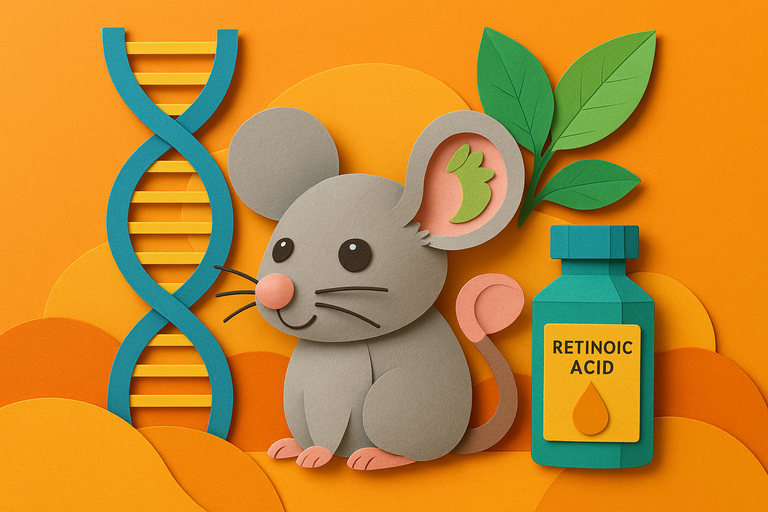
A tiny switch in mice has sparked a big breakthrough in regenerative medicine. Scientists at Beijing's National Institute of Biological Sciences have successfully regrown damaged outer ears in mice, unlocking a genetic key to organ regeneration.
The secret? Retinoic acid, a vitamin A derivative. By supplementing this crucial molecule, researchers reactivated dormant regenerative abilities, completely restoring ear tissue, including cartilage.
"Our findings may help in increasing understanding of the evolution of regeneration," the study notes, hinting at broader implications for human healing.
This three-year journey, aided by cutting-edge "Stereo-seq" technology, revealed surprising simplicity in a complex process. A single gene, when activated, reignited the mice's lost regenerative powers.
While human applications remain distant, this "proof of principle" opens new avenues for regenerative medicine. As researchers unravel the genetic switches for different organs, we may be one step closer to unlocking our own healing potential.
SMRTR provides this summary for quick context. The original article belongs to Interesting Engineering.
Read the original article