
How automation and farm robots are transforming agriculture
SMRTR summary
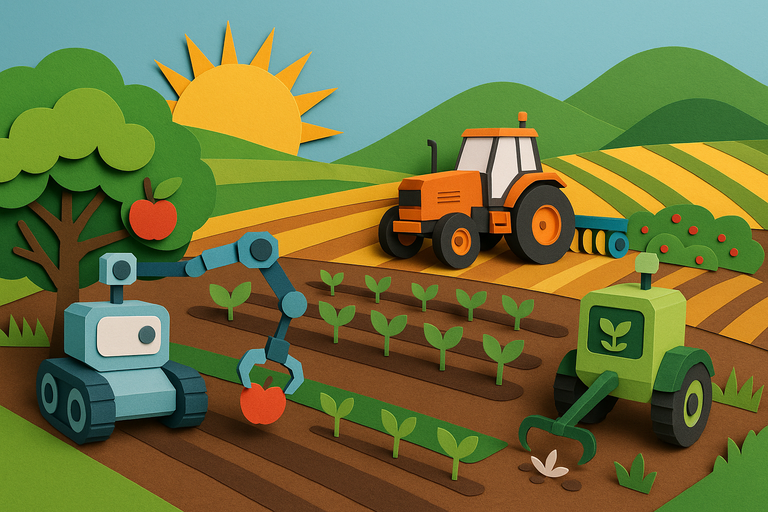
Agricultural robots are quietly revolutionizing farms across America, picking delicate fruit, removing weeds without chemicals, and precisely planting seeds—tasks once impossible without human hands. What began with GPS-guided tractors in the 1990s has evolved into sophisticated machines with centimeter-level accuracy.
"By 2050, the world will need 70% more food to feed nearly 9.7 billion people," according to a United Nations report, making these technologies essential rather than optional.
Today's farm robots equipped with AI and satellite imagery can identify exactly where to water or fertilize, reducing waste and environmental impact. They're transforming everything from weed control to harvesting.
Despite high initial costs, the economic benefits are compelling: 20-30% reduced expenses on repetitive tasks, 10-30% higher crop yields, and 15-25% savings on fertilizers and water.
The market for agricultural robotics, valued at $3.43 billion in 2019, is projected to reach $36.86 billion by 2027.
Beyond economics, these technologies support sustainable farming by protecting soil health and biodiversity while ensuring food security for a growing population.
SMRTR provides this summary for quick context. The original article belongs to Robot Report.
Read the original article