
China’s Guowang megaconstellation is more than another version of Starlink
SMRTR summary
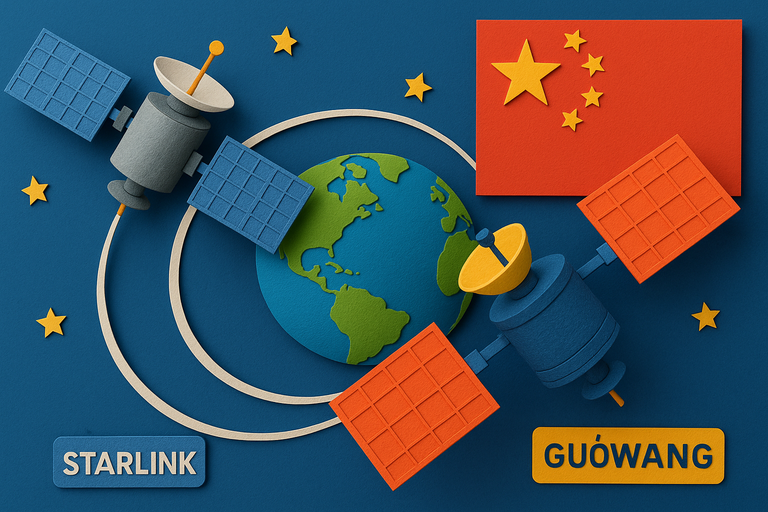
Chinese military ambitions are reaching skyward as a flurry of satellite launches reveals what may be far more than just a Starlink competitor. In recent weeks, China has matched SpaceX's pace, sending five groups of mysterious Guowang satellites into orbit.
"This is a strategy to keep the US from intervening, and that's what their space architecture is designed to do," warns Brig. Gen. Anthony Mastalir, commander of US Space Forces in the Indo-Pacific region.
Unlike the consumer-focused Starlink, Guowang—meaning "national network"—appears designed for military applications. The constellation's secretive management by China SatNet, established in 2021, has released minimal information about its capabilities.
While SpaceX packs up to 28 Starlink satellites per launch, China sends fewer Guowang satellites to altitudes three to four times higher, requiring fewer satellites for global coverage.
US officials worry Guowang might integrate multiple military capabilities—communications, radar, and optical sensing—creating a space-based "kill chain" that could detect, track and target American assets throughout the Western Pacific.
With 72 satellites already orbiting and plans for nearly 13,000 more, China's celestial ambitions are clear, potentially giving them a head start in the militarization of low Earth orbit.
SMRTR provides this summary for quick context. The original article belongs to Ars Technica.
Read the original article