
Why humanoid robots are learning everyday tasks faster than expected
SMRTR summary
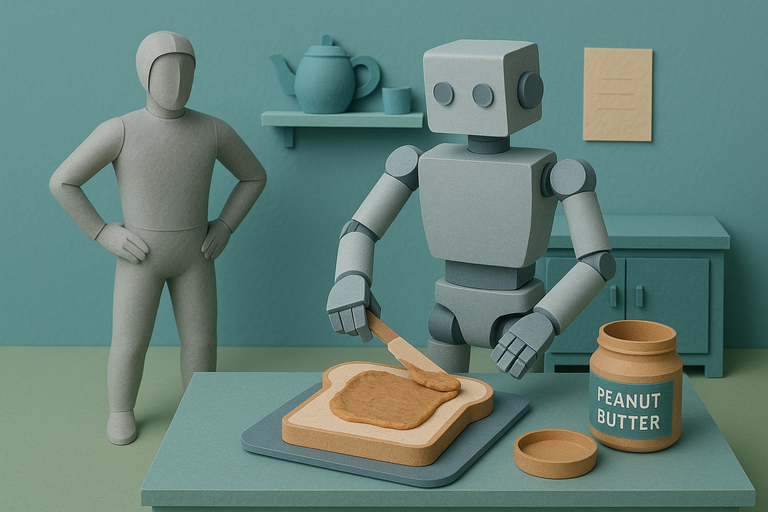
A roboticist in a silver bodysuit challenged the world's machines to master mundane human tasks like buttoning shirts and spreading peanut butter, expecting his "Humanoid Olympic Games" would stump robots for years. Instead, within just three months, Physical Intelligence's robot conquered 11 of 15 challenges that Benjie Holson thought would take over a year to solve.
The secret wasn't sophisticated touch sensors or complex programming, but surprisingly simple camera-based vision systems watching how objects squish and deflect. "When smearing peanut butter on bread, the robot watches the knife deflect down and crush the bread and judges forces from that," Holson explains, admitting he "wildly underestimated what's possible with vision-only and simple manipulators."
These robots learn by watching humans demonstrate tasks hundreds of times, then mimicking those movements using artificial intelligence that already understands concepts like teapots and water from internet training data.
The breakthrough has slashed Holson's timeline for useful home robots from 15 years to just six, though he cautions that making lab demonstrations into reliable consumer products remains the biggest hurdle.
SMRTR provides this summary for quick context. The original article belongs to Scientific American.
Read the original article