
Why are some rocks on the moon highly magnetic?
SMRTR summary
A cosmic collision may have solved one of the moon's enduring mysteries. MIT scientists propose that a massive asteroid impact, combined with the moon's weak magnetic field, created a brief magnetic surge on the lunar far side.
Lead author Isaac Narrett explains, "There are large parts of lunar magnetism that are still unexplained. But the majority of the strong magnetic fields that are measured by orbiting spacecraft can be explained by this process."
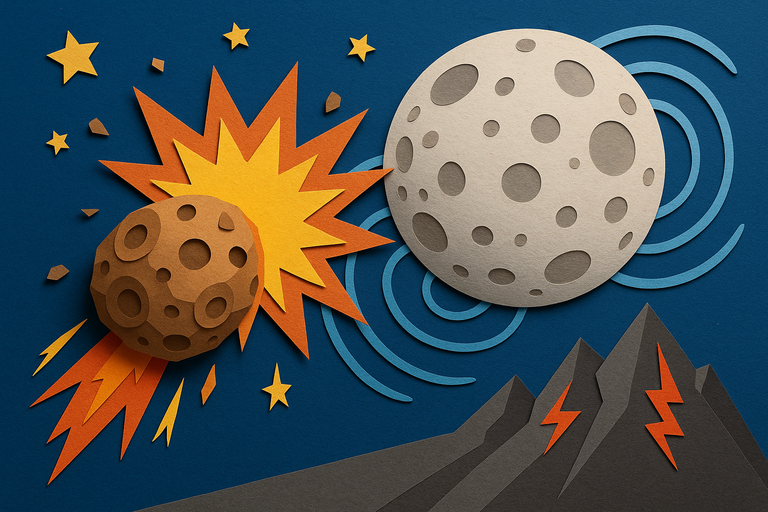
The team's simulations show that a large impact, like the one that formed the Imbrium basin, could have generated a plasma cloud enveloping the moon. This ionized gas would have concentrated on the far side, amplifying the weak magnetic field for about 40 minutes.
Simultaneously, the impact's shockwave would have "jittered" nearby rocks, allowing their electrons to align with the temporary strong field. This combination of events could explain the highly magnetized rocks detected near the lunar south pole.
SMRTR provides this summary for quick context. The original article belongs to Science Daily.
Read the original article