
What Happened to Molecular Manufacturing?
SMRTR summary
Sixty-five years ago, Nobel laureate Richard Feynman posed a whimsical question that launched a technological revolution: Why can't we write the entire Encyclopedia Britannica on the head of a pin? His 1959 lecture introduced the world to nanotechnology, declaring that "the principles of physics, as far as I can see, do not speak against the possibility of maneuvering things atom by atom."
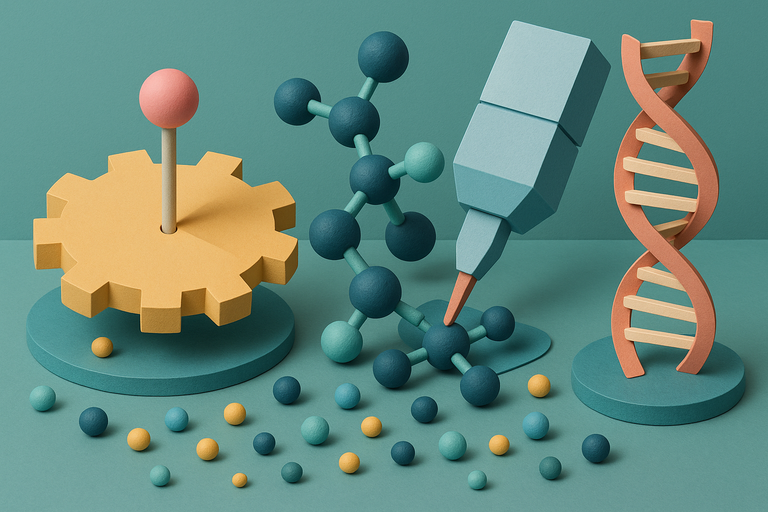
Today, scientists are pursuing two main paths toward this atomic-scale manufacturing dream. The first uses protein engineering to harness nature's own molecular machines like ribosomes, while the second employs mechanosynthesis to position individual atoms using specialized microscopes.
Recent breakthroughs in artificial intelligence, particularly DeepMind's protein-folding advances, are accelerating progress. Technology analyst Eli Dourado suggests the economic impact would be staggering, with some estimates indicating molecular manufacturing could replicate America's entire infrastructure in just one week.
Despite decades of research and achievements like carbon nanotubes and lipid nanoparticles in vaccines, we remain far from Feynman's vision of true atom-by-atom construction. The most promising approach now combines both pathways into something resembling a "molecular 3D printer" that could transform nearly every industry by making materials abundant and cheap.
SMRTR provides this summary for quick context. The original article belongs to Hacker News.
Read the original article