
The Schrödinger equation just turned 100, and quantum physicists are still grappling with its mysteries
SMRTR summary
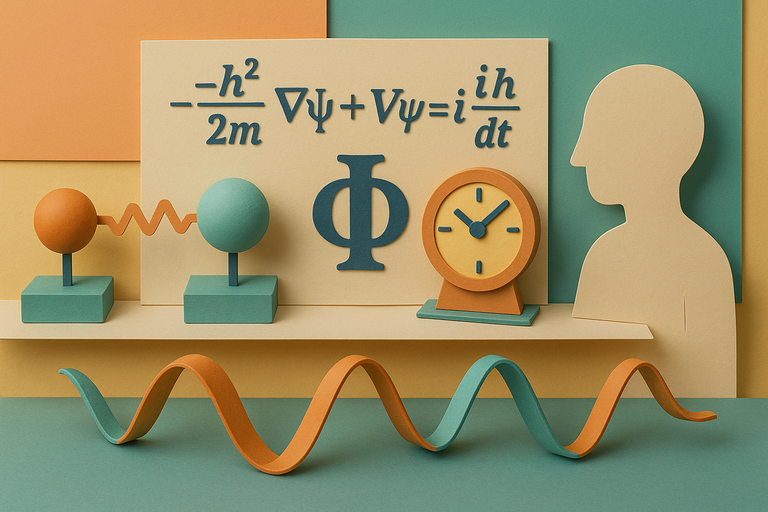
A century ago this week, Erwin Schrödinger submitted an innocuous-looking equation that would revolutionize our understanding of reality itself. Now, physicists are rewriting that famous formula to include something that was mysteriously absent from the original: the observer. This radical approach, called quantum reference frames, treats measuring devices like clocks as quantum objects themselves, subject to uncertainty and fuzziness. The results are startling. Scientists have discovered that quantum entanglement isn't an objective fact but depends on who's doing the observing. "Things that don't look entangled in one frame can look entangled in another," says physicist Anne-Catherine de la Hamette. The technique has already helped tackle one of physics' thorniest problems: when researchers added a quantum observer to black hole equations, mathematical infinities that seemed impossible to calculate suddenly became manageable. As these quantum reference frame enthusiasts gathered for their first conference last year, they're now eyeing bigger mysteries, including the fundamental question of what happens to quantum systems at the moment of observation. "The lesson may be," de la Hamette notes, "that we should not have forgotten the observer."
SMRTR provides this summary for quick context. The original article belongs to Scientific American.
Read the original article