
The Last Mystery of Antarctica’s ‘Blood Falls’ Has Finally Been Solved
SMRTR summary
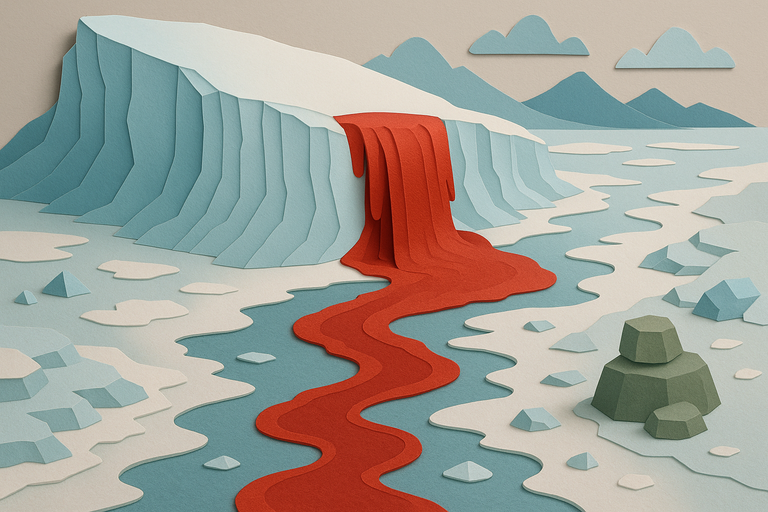
Crimson liquid suddenly gushes from Antarctica's Taylor Glacier like something out of a horror film, and scientists have finally solved the century-old mystery behind these dramatic Blood Falls.
What early explorers thought was red algae turns out to be iron particles produced by ancient bacteria, trapped underground for millions of years and rusting on contact with air.
The "blood" itself is actually a hypersaline brine so salty it won't freeze even at minus 20 degrees Celsius, formed when Antarctic Ocean waters receded 2 million years ago.
New research using GPS data and thermal sensors during a 2018 eruption reveals the dramatic mechanism: as Taylor Glacier slides downstream, the ice mass compresses underground channels, building tremendous pressure until the ice finally gives way and shoots pressurized brine through cracks in short, violent bursts.
Remarkably, each crimson eruption acts as a hydraulic brake, temporarily slowing the glacier's movement across this frozen desert landscape.
SMRTR provides this summary for quick context. The original article belongs to Wired.
Read the original article