
The Divers Who Stretch the Limits of Human Biology
SMRTR summary
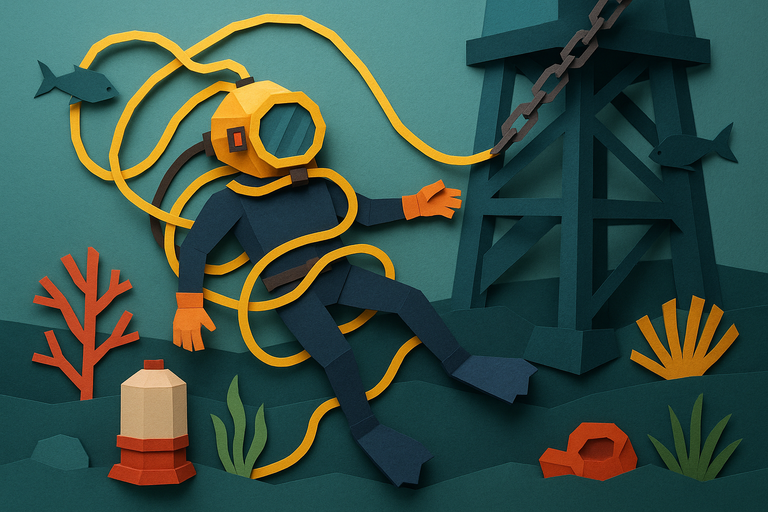
Chris Lemons watched himself die for 40 minutes, captured on grainy black-and-white video at the bottom of the North Sea. The English saturation diver lay motionless 300 feet underwater, his limbs twitching then going still, after his air hose snapped during a freak accident in 2012.
"It was like a jack being pulled from a speaker," Lemons recalls. "I lost all communication, which puts you in a very lonely place. Then the hose, which provides an infinite amount of gas—suddenly I had nothing to breathe at all."
His ship had drifted away just as his umbilical cord became entangled in underwater drilling equipment. For one terrifying moment, Lemons himself was the only thing anchoring the 8,000-ton vessel.
Miraculously revived after 40 minutes without breathing, Lemons returned to work three weeks later. He's part of an elite group of perhaps 12,000 saturation divers worldwide who live in pressurized chambers for weeks, descending to oceanic depths that would kill most humans.
These modern-day deep-sea plumbers earn up to $200,000 annually maintaining offshore oil infrastructure, breathing helium mixtures that make them sound like chipmunks while negotiating the razor's edge of human survival.
SMRTR provides this summary for quick context. The original article belongs to Nautilus.
Read the original article