
Solar panels above rice paddies generate power while preserving crop yields
SMRTR summary
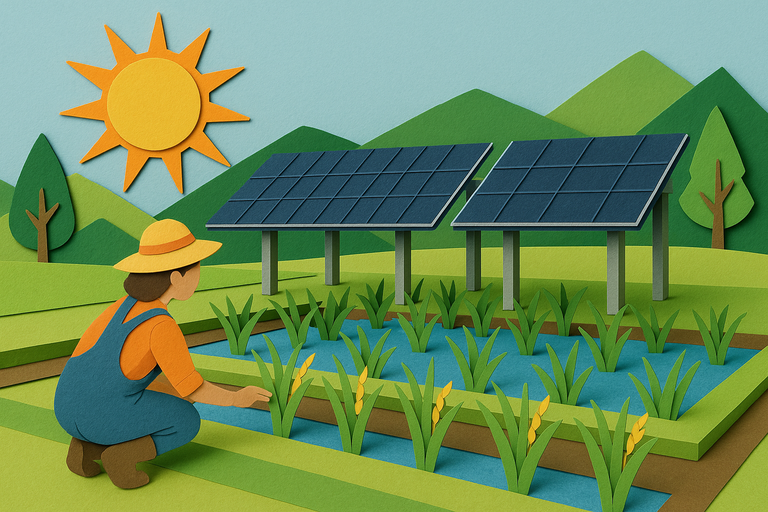
Hovering three meters above rice paddies in Nagano, Japan, sun-tracking solar panels follow the daily arc of light while farmers tend their crops below. This innovative approach could solve one of Japan's most pressing energy challenges.
University of Tokyo researchers have demonstrated that carefully managed solar arrays can generate electricity without sacrificing food production on Japan's limited arable land.
"The system adjusted panel angles seasonally—allowing more light during planting and early growth, then shifting to maximize power generation during the off-season," explains the research team in their Journal of Photonics for Energy publication.
Results proved promising: rice yields reached 85 percent of conventional production by the second year, with grain quality meeting Japan's top grade standards. Meanwhile, the array produced nearly 44,000 kilowatt-hours annually.
For mountainous Japan, where flat land comes at a premium, this dual-purpose approach offers a creative solution to competing land demands.
Researchers are now exploring AI control systems and semi-transparent panels to further refine the technology, potentially giving rural farmers a second revenue stream while helping the country meet its ambitious 2030 solar energy goals.
SMRTR provides this summary for quick context. The original article belongs to Interesting Engineering.
Read the original article