
Robots descend into lava tubes to prepare for future Moon bases
SMRTR summary
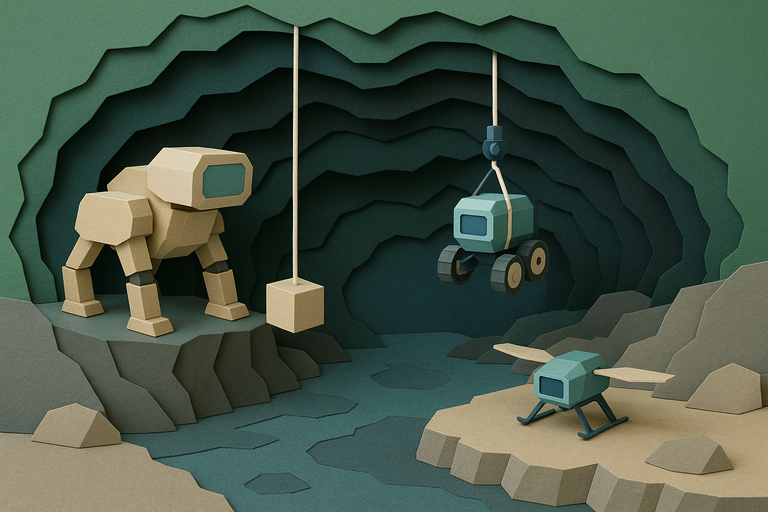
Three robots working as an autonomous team successfully rappelled into volcanic caves on Spain's Lanzarote island, testing technology that could one day establish humanity's first underground bases on the Moon and Mars. The European research consortium's mission unfolded in four stages: mapping the lava tunnel entrance, dropping a sensor cube into the depths, lowering a scout rover on cables, and finally conducting detailed 3D mapping of the interior.
These underground lava tubes offer natural protection from deadly space radiation and meteorite bombardments that constantly pummel planetary surfaces. The February 2023 field test, led by the German Research Center for Artificial Intelligence with Spain's University of Malaga, proved the concept works in real-world conditions.
The collaborative robotic approach addresses one of space exploration's thorniest challenges: how to safely explore environments too dangerous for human pioneers. As space agencies eye permanent lunar settlements, these self-navigating robot teams could scout and map the underground shelters that future astronauts will call home, transforming hostile alien caves into humanity's first extraterrestrial sanctuaries.
SMRTR provides this summary for quick context. The original article belongs to Science Daily.
Read the original article