
Researchers beam energy from a moving aircraft to test space solar power
SMRTR summary
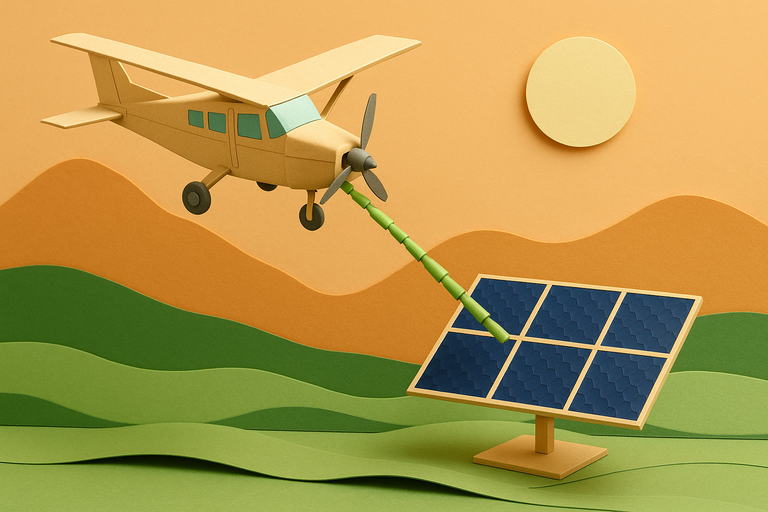
A small Cessna Caravan flying three miles above Virginia recently accomplished something that sounds like science fiction: beaming solar energy down to Earth using an array of lasers and precision tracking systems. Overview Energy, the Northern Virginia startup behind the test, used equipment nearly identical to what they plan to launch into space, successfully powering ground-based solar panels from their airborne platform.
The experiment mirrors similar efforts worldwide, including a Japanese test using microwave technology, as companies race to solve one of solar power's biggest limitations. Unlike earthbound panels that only work during daylight hours, orbital solar farms could beam energy around the clock by relaying power between satellites, while collecting significantly more energy without atmospheric interference.
Overview Energy aims to launch its first orbital solar farm to 22,000 miles above Earth by 2030, with plans to deliver more than a gigawatt of continuous power anywhere on the planet. UK researchers estimate that if technical hurdles like energy conversion efficiency and space debris can be overcome, orbital solar power could supply 80% of Europe's energy needs by 2050.
SMRTR provides this summary for quick context. The original article belongs to TechSpot.
Read the original article