
Nothing is Absolute: A Beginner’s Guide to Einsten's Theory of Sepcial Relativity
SMRTR summary
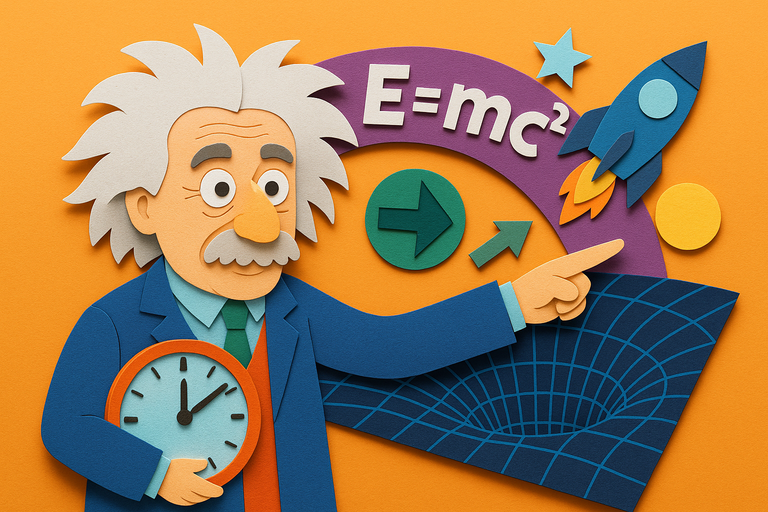
A wild-haired outsider challenged the foundations of physics, proclaiming that nothing is absolute—everything is relative. Albert Einstein's theory of Special Relativity upended our understanding of space and time, suggesting these fundamental concepts are not fixed, but flexible.
Einstein's key insight was to flip assumptions. Instead of treating time, space, and mass as absolute, he declared the speed of light to be the constant, letting everything else adapt. This reconciled conflicting theories and explained puzzling experimental results.
The implications are mind-bending. Time slows for objects in motion. Distances shrink. Mass increases. These effects, while imperceptible in daily life, are crucial in particle physics and even GPS technology.
Einstein's work went beyond physics, sparking a cultural shift. It suggested that even our most basic assumptions can be questioned, opening doors to new ways of thinking across disciplines.
Today, Einstein remains the quintessential scientist in the public imagination, a testament to the profound impact of his revolutionary ideas.
SMRTR provides this summary for quick context. The original article belongs to Hacker Noon.
Read the original article