
New study reveals why time seems to move faster the older we get
SMRTR summary
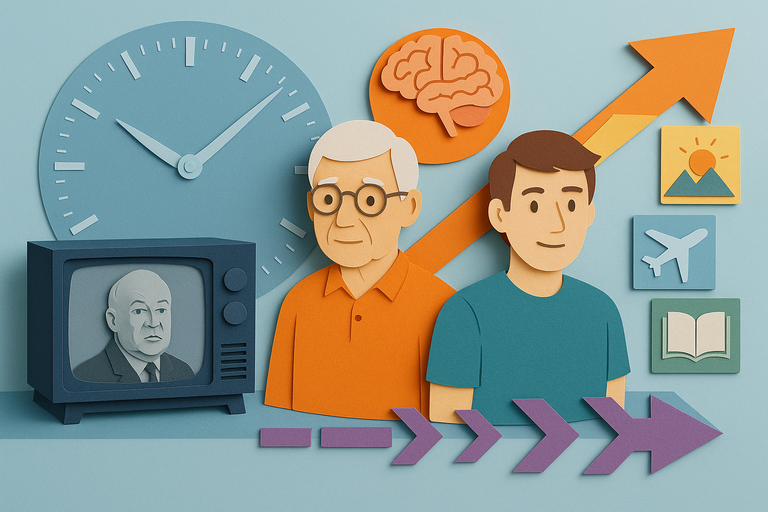
Alfred Hitchcock's 1950s television thriller "Bang! You're Dead" has provided an unexpected window into one of aging's most perplexing mysteries: why time seems to accelerate as we grow older.
Scientists scanned the brains of 577 people, ages 18 to 88, while they watched eight minutes of the classic Hitchcock episode. Using an algorithm that hunts for shifts in brain activity patterns, researchers discovered something striking. Older participants' brains transitioned between different activity states less frequently than younger viewers, with each brain state lasting longer.
This finding supports an ancient idea dating back to Aristotle: the more notable events we experience, the longer time feels subjectively. If older brains are registering fewer distinct "events" during the same time period, that could explain why decades seem to whoosh by in later life.
The culprit appears to be neural dedifferentiation, where aging brains become less precise at distinguishing between different types of experiences.
But there's hope. As researcher Linda Geerligs notes, "Learning new things, traveling, and engaging in novel activities may help make time feel more expansive."
SMRTR provides this summary for quick context. The original article belongs to Live Science.
Read the original article