
New Hubble images reveal a bizarre decagon over Saturn’s south pole
SMRTR summary
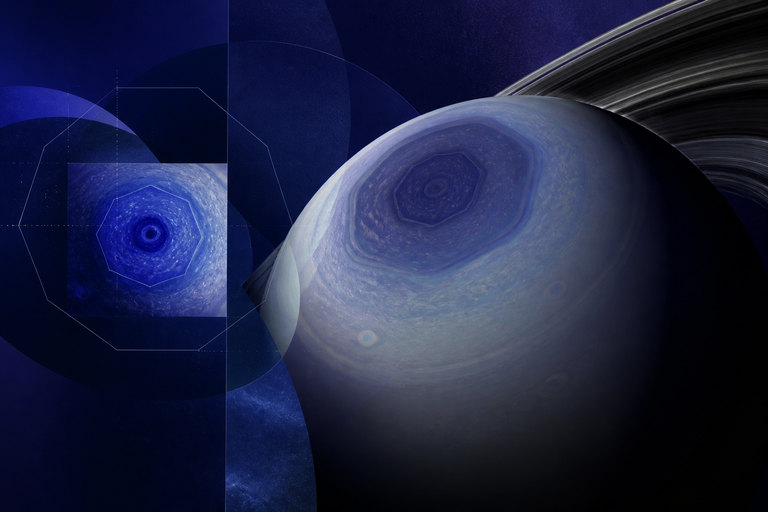
Saturn has a new geometric secret. Scientists have spotted a ten-sided polygon circling the planet's south pole, a shape so unexpected it's rewriting assumptions about one of our solar system's most iconic worlds.
For decades, Saturn's north pole has been famous for its hexagonal jet stream, first spotted in 1980. But NASA's Cassini mission spent over 13 years orbiting Saturn and never saw anything comparable in the south. Now, using Hubble and a network of amateur astronomers, researchers have confirmed a decagon-shaped atmospheric jet doing something remarkably similar.
"This discovery suggests that the hexagon is not as extraordinary as previously thought," says planetary scientist Agustín Sánchez-Lavega of the University of the Basque Country in Bilbao, Spain.
Scientists aren't sure when it formed, or how long it will last. Gas giants, as one researcher puts it, "look nice and serene, but they're very windy."
Hubble is already scheduled to observe Saturn again later this month.
SMRTR provides this summary for quick context. The original article belongs to Science News.
Read the original article