
NASA’s Fission Surface Power Project Aims to Plant a Nuclear Reactor on the Moon
SMRTR summary
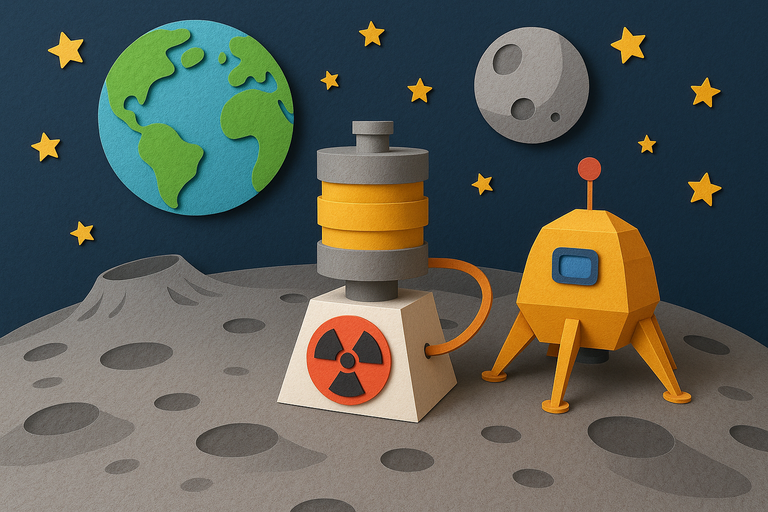
A small nuclear reactor could soon hum beneath the lunar surface, powering humanity's return to the Moon through its punishing two-week nights when solar panels become useless.
"NASA's strategy was to throw a wide net and not specify too much to see what would come out," explains the space agency as it evaluates three distinct reactor designs that could revolutionize off-world exploration.
Each proposed system must generate 40 kilowatts of power (enough for 33 US households), weigh less than 6 metric tons, and operate autonomously for a decade without human intervention.
The reactors would solve a fundamental challenge of lunar exploration: maintaining power when darkness falls for 14.5 Earth days at a time. They could also enable exploration of permanently shadowed craters where water ice may be hiding.
NASA plans to select a final design in 2025, aiming for a lunar demonstration in the early 2030s. If successful, the technology could be adapted for Mars, where conditions are even harsher.
The agency is simultaneously developing more efficient Brayton power converters to transform nuclear heat into usable electricity, ensuring every precious watt counts.
SMRTR provides this summary for quick context. The original article belongs to TechEBlog.
Read the original article