
Moon dust to bases: New 3D laser technique could be the future of lunar bases
SMRTR summary
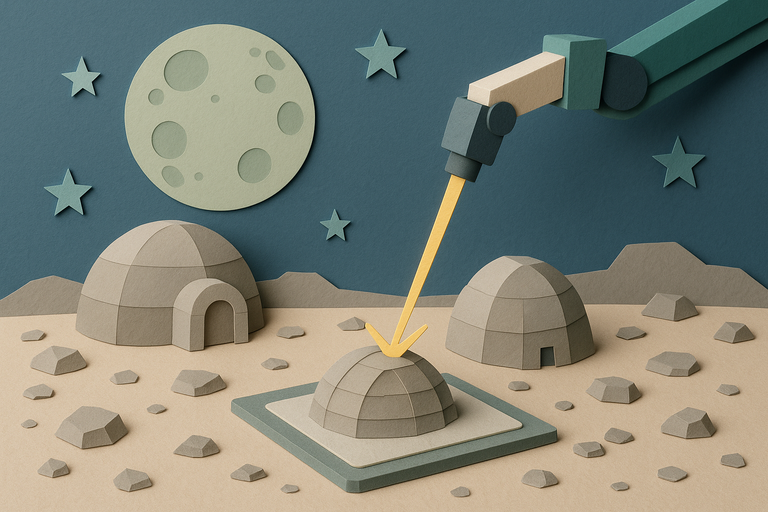
Scientists at Ohio State University are using high-powered lasers to melt Moon dust into building materials, turning the fine-grained, razor-sharp lunar regolith into durable ceramic-like structures through a process called laser 3D printing. The technique could revolutionize future lunar missions by eliminating the need to ship construction materials to the Moon, where it costs over a million dollars per kilogram to transport supplies.
The researchers spread synthetic Moon dust in thin layers and blast it with lasers, melting and fusing the particles into strong, heat-resistant ceramics. They discovered the process works on various surfaces but adheres best to alumina-silicate ceramics, creating materials that could withstand the Moon's brutal temperature swings from 120 degrees Celsius to minus 170 degrees.
"By combining different feedstocks, like metal and ceramics, in the printing process, we found that the final material is really sensitive to the environment," said Sizhe Xu, the study's lead author.
This technology could prove essential for NASA's Artemis program, which aims to establish permanent lunar bases using locally sourced materials rather than expensive Earth-shipped supplies.
SMRTR provides this summary for quick context. The original article belongs to Interesting Engineering.
Read the original article