
Mining the Moon’s helium-3: The race fueling quantum dreams and fusion hopes
SMRTR summary
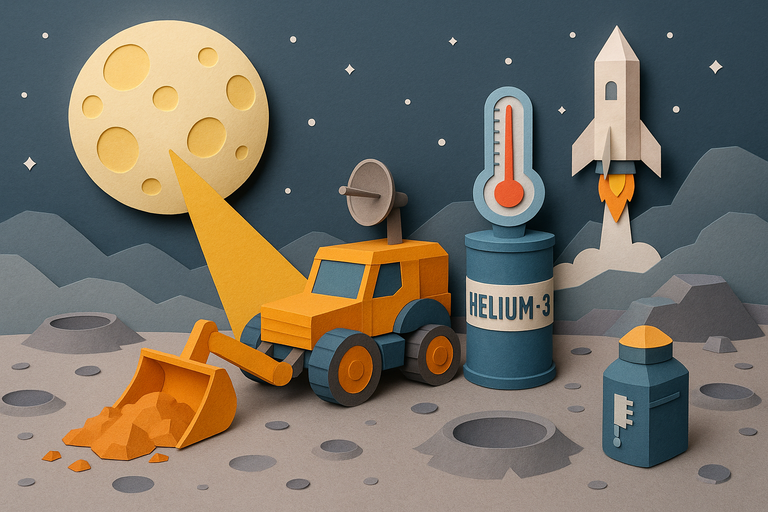
A race to harvest the Moon's cosmic dust might determine the future of both quantum computing and clean energy. Billions of years of solar wind have embedded helium-3, an ultra-rare isotope, into the lunar surface.
"It's like 200 times colder inside a Blue Origin fridge than outer space," explains one cryogenics engineer, describing how helium-3 helps cool quantum computers to near absolute zero temperatures where quantum states can function.
Earth's limited supply comes mainly from nuclear stockpiles, but the Moon potentially holds a million metric tons. The catch? It's dispersed at concentrations measured in parts per billion, requiring massive excavation efforts.
Companies like Interlune are designing lightweight harvesters to process "enough lunar regolith to fill a large backyard swimming pool" for just a few liters of helium-3.
The stakes have governments scrambling. The U.S. Department of Energy recently announced the first-ever purchase of an extraterrestrial resource: three liters of lunar helium-3.
Meanwhile, China and Russia have formed their own lunar alliance, setting the stage for what could become space's first resource rush.
SMRTR provides this summary for quick context. The original article belongs to Interesting Engineering.
Read the original article