
'Like watching a cosmic volcano erupt': Scientists see monster black hole 'reborn' after 100 million years
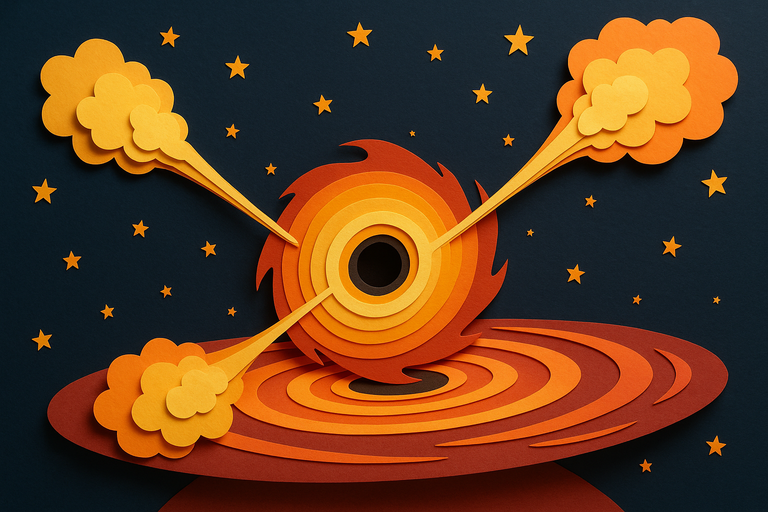
SMRTR summary
A supermassive black hole has awakened after nearly 100 million years of cosmic slumber, creating what one scientist calls "a cosmic volcano erupting again after ages of calm." The sleeping giant lies at the heart of galaxy J1007+3540, where researchers discovered the telltale signs of its dramatic reboot: massive plasma jets stretching hundreds of thousands of light-years into space.
Using radio telescopes in the Netherlands, astronomers found evidence of the black hole's turbulent history written in layers of plasma. Ancient lobes dating back 240 million years sit alongside younger, brighter jets just 140 million years old, revealing that this galactic engine has been cycling on and off across cosmic time.
"This dramatic layering of young jets inside older, exhausted lobes is the signature of an episodic AGN," explains astronomer Shobha Kumari. The surrounding superheated gas bends and warps these jets in chaotic ways, with one lobe squished sideways while another displays a kinked tail that traces the invisible forces shaping this million-light-year-wide cosmic spectacle.
SMRTR provides this summary for quick context. The original article belongs to Live Science.
Read the original article