
How to Restore a Rembrandt
SMRTR summary
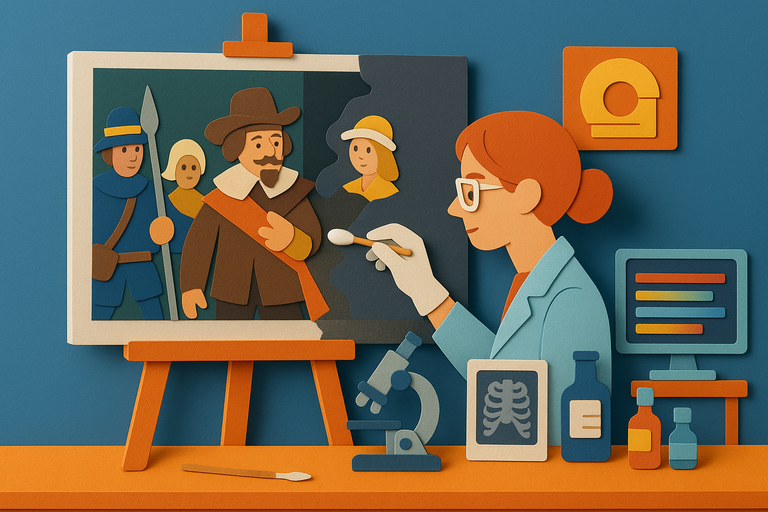
Behind the delicate sweep of a cotton swab, the masterpiece awakens. At Amsterdam's Rijksmuseum, conservators are meticulously removing centuries-old varnish from Rembrandt's massive "Night Watch" painting—a painstaking process that reveals vibrant colors long hidden beneath a gray shadow.
This ambitious restoration, known as Operation Night Watch, represents the cutting edge of art conservation, where science meets cultural preservation.
"The field is waking up to the fact that these objects in our care have values embedded in them," explains Glenn Wharton, Chair of the UCLA/Getty Interdepartmental Program in the Conservation of Cultural Heritage.
Today's conservators employ technology borrowed from medicine—CT scans, hyperspectral imaging, and X-ray techniques—to peer inside artworks without damaging them. For the Night Watch, experts identified ten key elements needing repair on the 12 by 14.5-foot canvas.
The conservation world is also embracing traditional methods, like using neem trees to protect textiles from pests—knowledge passed down through generations.
As the field evolves, conservation increasingly involves collaboration with Indigenous experts and affected communities, ensuring cultural heritage is preserved not just physically, but contextually.
SMRTR provides this summary for quick context. The original article belongs to Nautilus.
Read the original article