
How to build a moon base
SMRTR summary
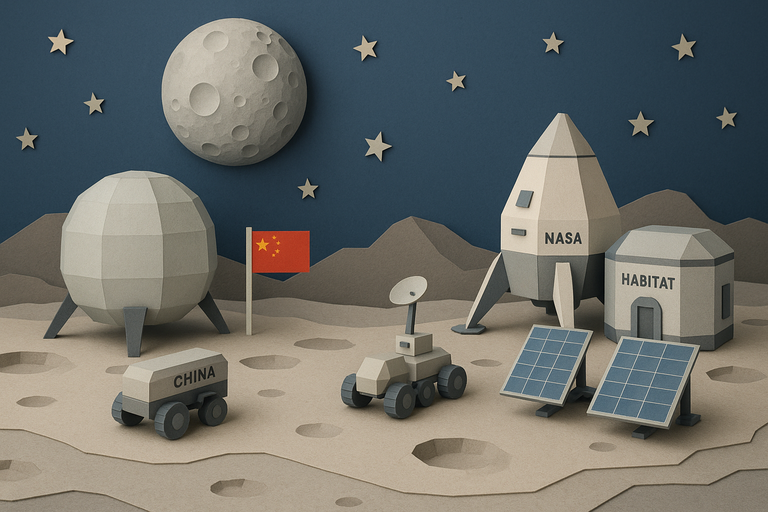
Two nations are racing to build permanent moon bases, but they're taking dramatically different approaches to get there. China aims for a human moon landing by 2030, targeting safer equatorial sites reminiscent of Apollo missions, while NASA's 2028 Artemis plan boldly targets the treacherous but resource-rich lunar south pole. China's International Lunar Research Station, built with Russia, will rely on robotic missions like Chang'e 7 and 8 to scout locations and test construction techniques using lunar soil. NASA's Artemis Base Camp, meanwhile, will initially resemble what administrator Jared Isaacman described to the New York Times as a "futuristic junkyard with lots of landers and rovers around" before evolving into sophisticated infrastructure.
The stakes extend far beyond national prestige. Both countries want the same prime real estate near the south pole, where water ice could be processed into drinking water and rocket fuel. Republican Senator Ted Cruz made the urgency clear during recent Senate proceedings, saying the bill explicitly directs NASA "to create a permanent moon base so that we can get there before China does." Yet the moon's south pole offers surprisingly few suitable sites that combine safe landing terrain, continuous sunlight, and proximity to ice-filled craters, setting up potential conflicts over lunar territory that could test international space law.
SMRTR provides this summary for quick context. The original article belongs to Scientific American.
Read the original article