
Five Math Discoveries That Continue To Surprise And Delight
SMRTR summary
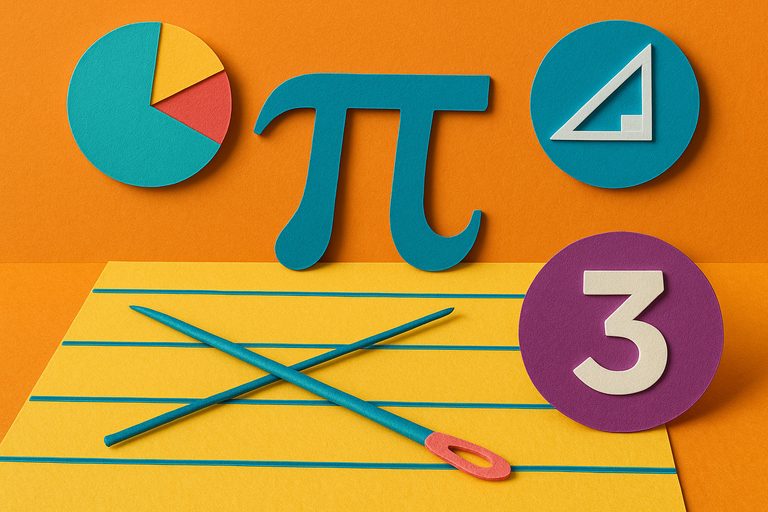
A simple dropped needle holds the key to calculating pi. In 1733, French mathematician Georges-Louis Leclerc, Comte de Buffon, posed a fascinating problem: If you drop a needle onto a lined surface, what's the probability it will cross a line? The answer, surprisingly, involves pi.
This elegant connection between randomness and geometry captivated mathematicians for centuries. It even inspired real-world experiments, with people dropping thousands of needles to estimate pi's value.
Beyond its mathematical beauty, Buffon's needle problem showcases how abstract concepts can emerge from everyday objects. It's a reminder that profound insights often hide in plain sight, waiting for curious minds to uncover them.
The problem's enduring appeal lies in its accessibility and depth – a hallmark of mathematical classics that continue to inspire and educate generations of students and researchers alike.
SMRTR provides this summary for quick context. The original article belongs to Medium.
Read the original article