
First maps of the sun’s outer boundary may help predict solar storms
SMRTR summary
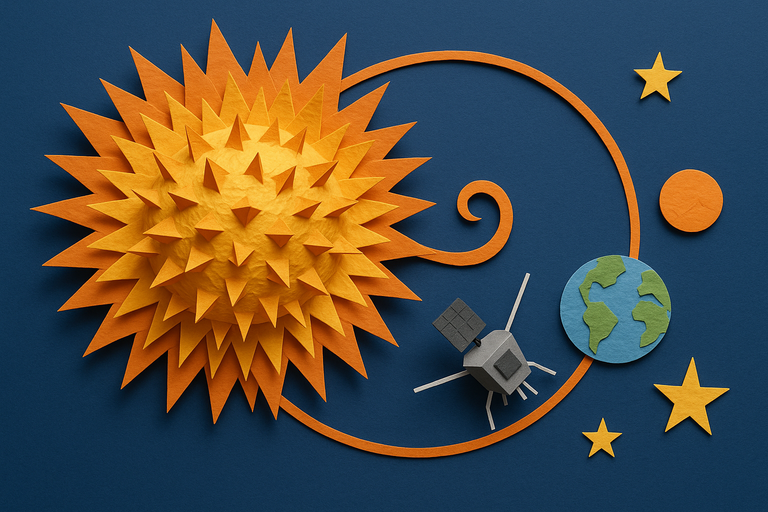
The sun's outer atmosphere looks like a pufferfish, according to new maps created from NASA's Parker Solar Probe that ventured where no spacecraft had gone before. Scientists have produced the first verified images of the Alfvén critical surface, an invisible boundary that marks where solar plasma transforms into solar wind. "The structure is basically this kind of corrugated, spiky shape," says heliophysicist Sam Badman from the Harvard-Smithsonian Center for Astrophysics.
Since 2021, Parker has dipped below this boundary 16 times, swooping as close as 6.1 million kilometers from the sun's surface. The data reveals that as solar activity increases, the boundary expands and becomes more chaotic and spiky.
These maps could help scientists better predict how solar storms affect satellites and create auroras on Earth. The research also has implications for planets orbiting close to magnetically active stars, where worlds might spend their entire existence within such boundaries. "That probably won't be good news for habitability," Badman notes.
SMRTR provides this summary for quick context. The original article belongs to Science News.
Read the original article