
Explainer: How friction inside magma determines the way volcanoes erupt
SMRTR summary
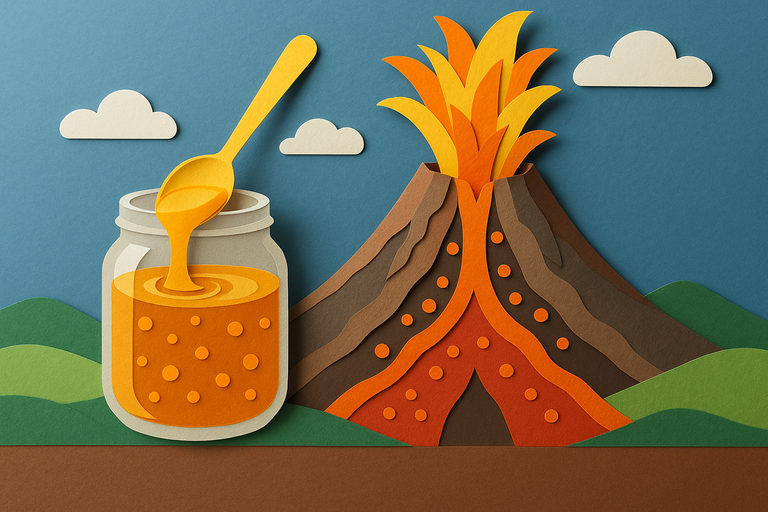
Stirring a jar of honey reveals an unexpected secret about why volcanoes sometimes fail to explode. For decades, scientists believed gas bubbles in magma formed only when pressure dropped as molten rock rose toward the surface. But new research published in Science shows that friction itself can create these crucial bubbles, much like honey flowing at different speeds when stirred.
ETH Zurich volcanologist Olivier Bachmann and his international team discovered that shear forces within volcanic conduits generate bubbles even without pressure changes. "Our experiments showed that the movement in the magma due to shear forces is sufficient to form gas bubbles – even without a drop in pressure," Bachmann explains.
This breakthrough helps solve a geological puzzle. Volcanoes like Mount St. Helens sometimes produce gentle lava flows despite containing explosive, gas-rich magma. The friction acts as a safety valve, allowing gases to escape gradually through bubble channels before dangerous pressure builds.
The discovery means volcano models must now account for these internal forces. "In order to better predict the hazard potential of volcanoes, we need to update our volcano models and take shear forces in conduits into account," Bachmann notes.
SMRTR provides this summary for quick context. The original article belongs to Interesting Engineering.
Read the original article