
Elizabeth Roboz Einstein—the determined genius behind a multiple sclerosis breakthrough
SMRTR summary
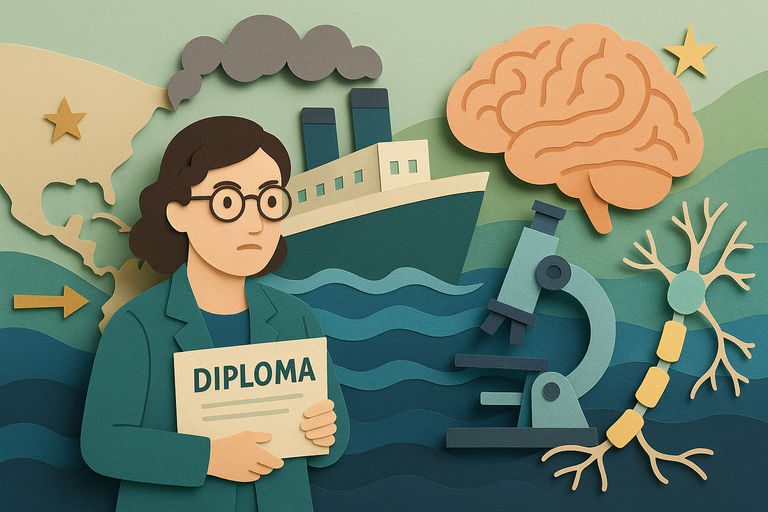
A Hungarian Jewish woman boards an Italian steamliner in complete darkness on May 15, 1940, clutching her Ph.D. diploma and fleeing toward an uncertain future in America. Elizabeth Roboz Einstein escaped Europe just weeks before Italy entered the war and the ship that saved her was sunk by Germans.
What followed was a remarkable scientific journey from studying sugar beets in California to pioneering the field of neurochemistry at Georgetown University. Despite facing the double barrier of being both female and Jewish in 1950s academia, Einstein revolutionized multiple sclerosis research by focusing on myelin as a key target.
Her groundbreaking work laid the foundation for modern MS treatments that help millions today. "To me and to many of my colleagues in the neurosciences, understanding and treating diseases of the brain is the most important part of medicine," says Dr. Stephen Hauser, who has studied MS since the 1970s.
Einstein's escape from Nazi Europe became fuel for scientific discovery that transformed how we understand and treat diseases of the brain.
SMRTR provides this summary for quick context. The original article belongs to Scientific American.
Read the original article