
Eel-inspired hydrogel battery delivers record power without toxic materials
SMRTR summary
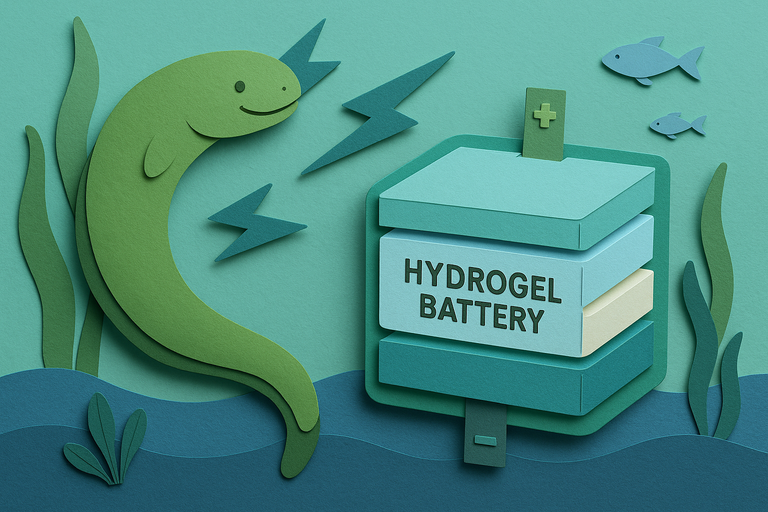
Electric eels can unleash 600 volts from cells thinner than a human hair, and now scientists at Penn State have borrowed that biological blueprint to create flexible batteries that could revolutionize medical implants and wearable technology. The researchers layered water-rich hydrogels just 20 micrometers thin, mimicking the ionic processes that give eels their shocking power.
"The electrocytes in electric eels are ultra-thin biological cells, capable of generating over 600 volts of electricity in a brief burst," says Joseph Najem, assistant professor of mechanical engineering. "These cells achieve very high-power densities, meaning they can produce a lot of power from small volumes."
Unlike previous eel-inspired devices that required rigid supports, these hydrogel batteries remain completely flexible while surviving extreme temperatures from minus 112 to 80 degrees Fahrenheit. The breakthrough came from perfecting the spin-coating process that creates ultra-thin layers without them flying off the spinning surface.
The batteries achieve power densities of 44 kilowatts per cubic meter while remaining non-toxic and water-retaining for days, opening possibilities for implanted sensors and soft robotics that need safe, flexible power sources.
SMRTR provides this summary for quick context. The original article belongs to Interesting Engineering.
Read the original article