
Deep-Sea Desalination Pulls Drinking Water from the Depths
SMRTR summary
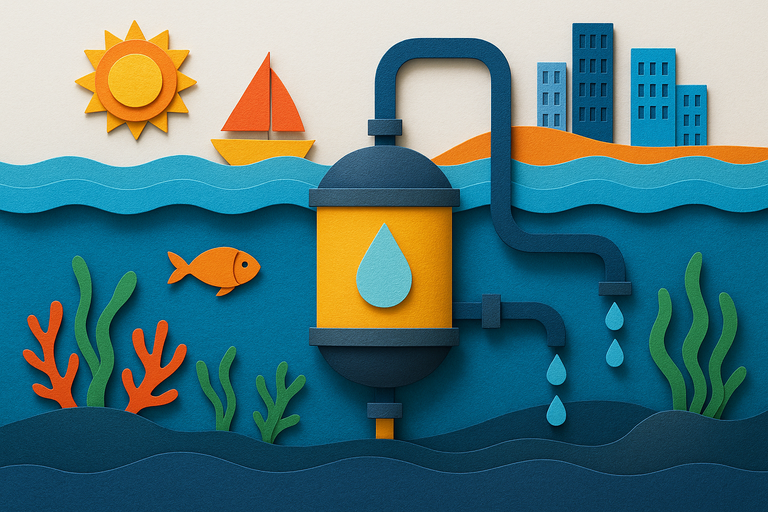
A silent revolution is unfolding 500 meters beneath the ocean's surface, where crushing water pressure is being harnessed to solve one of humanity's most pressing challenges: fresh water scarcity.
With dozens of cities from Cape Town to Phoenix facing water shortages, and the UN forecasting demand to outpace supply within five years, several companies are pioneering subsea desalination technology that could transform how we source drinking water.
"The deep sea is really predictable," explains Alexander Fuglesang, CEO of Oslo-based Flocean. "It's the same 365 days a year." His company's approach uses 40-50 percent less energy than conventional desalination by letting natural hydrostatic pressure do the work of separating salt from water.
The technology offers notable advantages: fewer microorganisms at depth, less chemical pretreatment, and no shoreline eyesores. But challenges remain.
"We need to remember that once the water is desalinated, it still needs to be pumped up from depths of up to 600 meters," notes Nidal Hilal from NYU's Water Research Center in Abu Dhabi.
Environmental concerns also persist. With pilot projects underway in Norway, the Red Sea, and off Los Angeles, subsea desalination could potentially go mainstream—though reaching true city-scale implementation might take a decade or more.
SMRTR provides this summary for quick context. The original article belongs to Scientific American.
Read the original article