
Can you survive inside a tornado? This scientist did by accident—he’s lucky to be alive
SMRTR summary
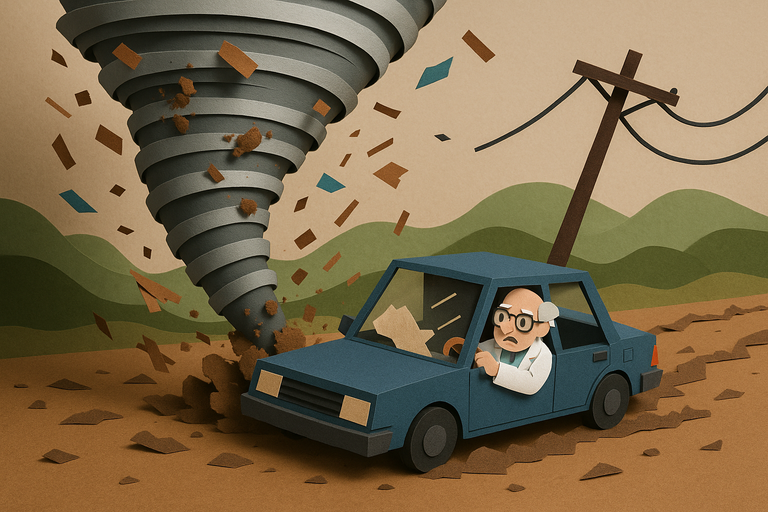
Atmospheric scientist Perry Samson found himself swallowed by a tornado's vortex in northwest Kansas, where the sound wasn't like a freight train but "a thousand screaming jet engines." Trapped in his rental car as debris slammed the windshield, Samson made a split-second decision to drive directly into the 150-mph winds, hoping aerodynamics would keep his vehicle pinned to the ground rather than flipped like a toy.
Inside the tornado's eye, Samson experienced crushing pressure changes that made his ears ache, wind that hit "with the force of a solid object," and a brownish-black soup of pulverized debris so thick his camera couldn't register a picture. The terror lasted minutes before an eerie silence fell, leaving his car buried in mud with straw embedded in every seam.
Tornadoes form when warm, muggy Gulf air meets dry western air along something called the dry line, creating the perfect violent recipe for rotating vortexes that can reach 300 mph. Sixty-one people died from tornadoes in the US in 2025, a reminder that sophisticated research using drones and radar is the smart way to study these atmospheric monsters.
SMRTR provides this summary for quick context. The original article belongs to Scientific American.
Read the original article