
Can future astronauts be put into comas for space travel like in Project Hail Mary?
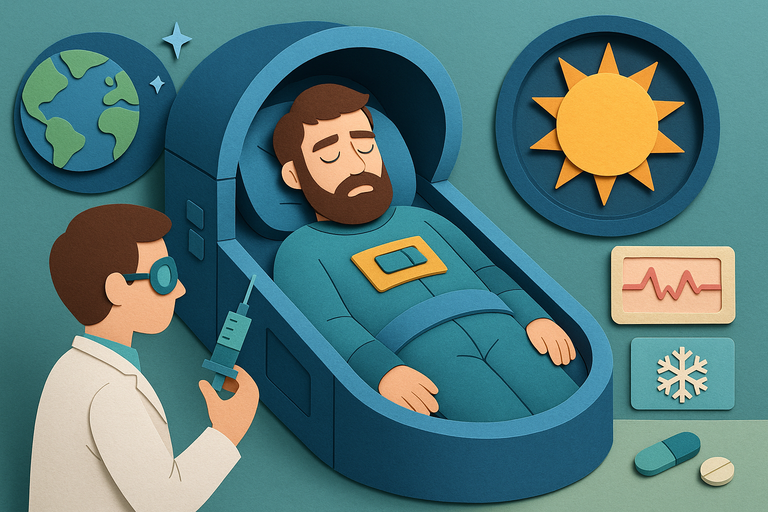
SMRTR summary
Ryan Gosling awakens groggy and bearded aboard a spaceship in the new film Project Hail Mary, playing a middle school teacher tasked with saving our dying sun. While the movie's premise sounds like pure fantasy, the science of suspended animation for space travel is surprisingly grounded in reality.
Researchers like Matteo Cerri at the University of Bologna are working with the European Space Agency to develop "synthetic torpor" for astronauts. Much like bears entering hibernation, humans could theoretically slow their metabolism dramatically, reducing food and oxygen needs while gaining protection from space radiation. "Life is moving but very slowly. It's like you slow down the clock of life, and every second lasts longer," Cerri explains.
Scientists have already induced torpor in rats by injecting drugs into their brain stems. Meanwhile, other researchers are exploring cryosleep, inspired by creatures like tardigrades that can turn glasslike and Siberian salamanders that survive frozen in permafrost.
But Hollywood gets one crucial detail wrong, Cerri notes. "The thing that every movie gets wrong, usually, is the arousal. Waking up is too immediate." Real revival would likely take hours or days.
SMRTR provides this summary for quick context. The original article belongs to Scientific American.
Read the original article