
Caltech’s Deep Synoptic Array Set to Uncover a Billion Cosmic Sources in Its First Years
SMRTR summary
Deep in a remote Nevada valley, construction is about to begin on what may be the most ambitious radio telescope ever built.
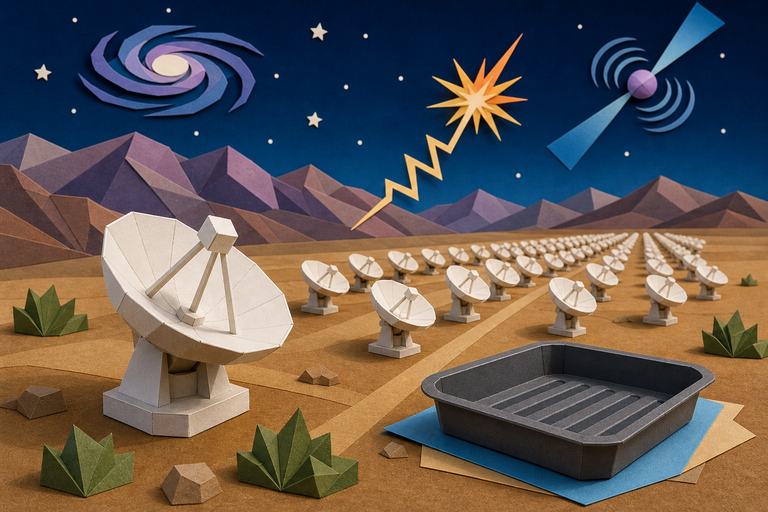
Caltech astronomers plan to install 1,650 radio dishes across a stretch of land roughly 20 kilometers long. Together, they'll form the Deep Synoptic Array, a system capable of sweeping the visible sky several times in its first five years and moving 100 times faster than any radio telescope currently in use.
The science goals are staggering. Within five years, the array aims to catalog over one billion previously unknown radio sources, identify 100,000 fast radio bursts, and discover 20,000 new pulsars.
Perhaps the most surprising part? The technology is deliberately simple. The receivers work at room temperature, and the components that convert radio waves into electrical signals were inspired, in part, by ordinary baking pans.
Sometimes, the most powerful tools are the ones that don't overcomplicate things.
SMRTR provides this summary for quick context. The original article belongs to TechEBlog.
Read the original article