
Brain Implant Lets Man with ALS Speak and Sing with His ‘Real Voice’
SMRTR summary
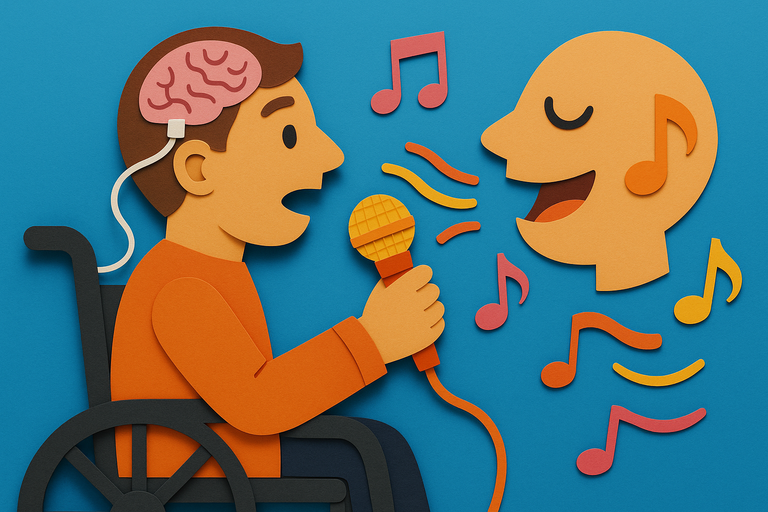
A symphony of thought erupts from a man's mind, translated into speech and song by a groundbreaking brain-computer interface. This new system, developed by researchers at the University of California, Davis, allows a 45-year-old with severe speech disabilities to communicate expressively in real-time.
The device decodes neural activity every 10 milliseconds, capturing not just words, but tone, pitch, and emphasis. It's a leap forward from previous models, offering spontaneous, continuous speech with emotional nuance.
"This is the holy grail in speech BCIs," says Christian Herff, a neuroscientist not involved in the study.
The participant, who lost clear speech to ALS, can now stress words, ask questions, and even hum in three pitches. His synthetic voice, modeled after recordings from before his illness, brings him joy. "I feel happy," he says, describing it as his "real voice."
This breakthrough could revolutionize communication for those with speech impairments, offering a more natural and expressive way to interact with the world.
SMRTR provides this summary for quick context. The original article belongs to Scientific American.
Read the original article