
Brain implant allows people who are paralyzed to type using their thoughts at speed of texting
SMRTR summary
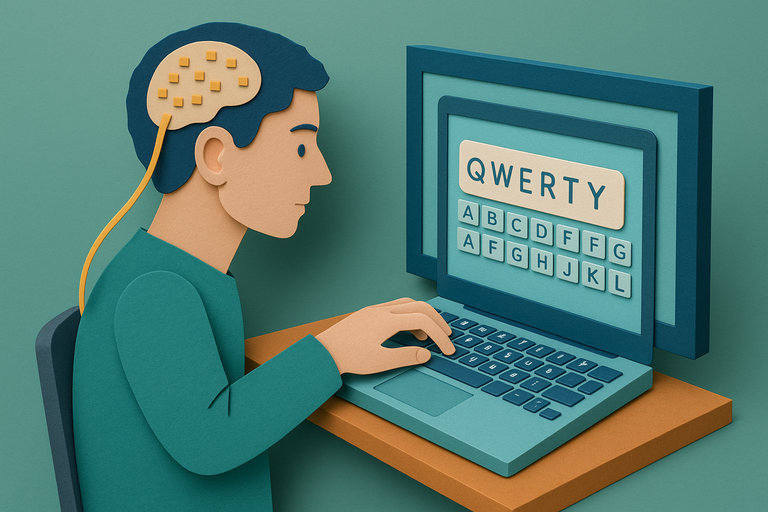
Twenty-two words per minute might sound leisurely for most typists, but for two people with near-total paralysis, it represents a breakthrough that brings them tantalizingly close to normal conversation speeds. Scientists have developed a brain-computer interface that decodes intended finger movements from paralyzed participants, allowing them to type on a virtual QWERTY keyboard simply by thinking about moving their hands.
The device, detailed in Nature Neuroscience, uses electrode chips implanted in the brain's motor cortex to capture neural signals, which artificial intelligence then translates into keystrokes. One participant with a spinal cord injury achieved the 22-word-per-minute speed with just 1.6 percent word errors.
"Communication speed matters, because being part of a conversation matters," says co-author Daniel Rubin from Massachusetts General Hospital. The technology dramatically outpaces earlier brain-typing systems that required users to laboriously move cursors to individual letters.
While companies like Neuralink race to commercialize such devices, this research faces practical hurdles: it requires risky brain surgery and daily calibration. As Rubin puts it, "It's almost like a musical instrument, and you have to tune it each day."
SMRTR provides this summary for quick context. The original article belongs to Scientific American.
Read the original article