
Blazing like 10 billion suns: NASA’s Swift sees a wandering black hole devouring a star
SMRTR summary
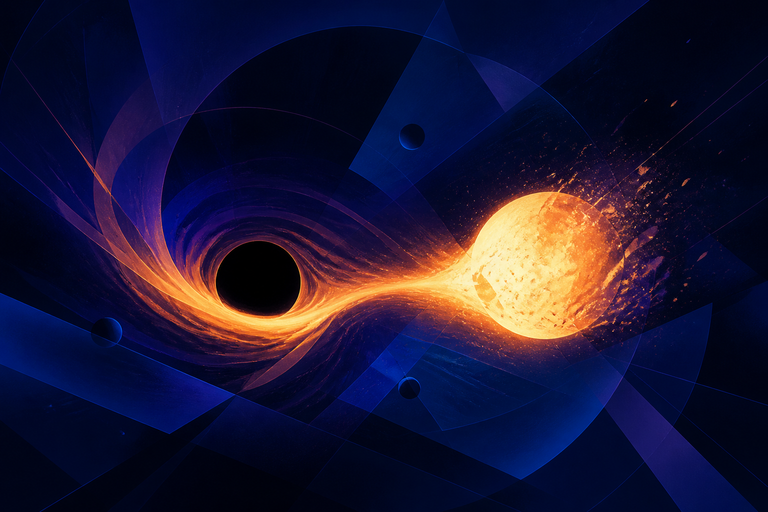
A black hole, roughly a million times the mass of our Sun, has been caught red-handed shredding a star in a place it simply shouldn't be: 30,000 light-years from the center of its galaxy.
Detected first by the Zwicky Transient Facility in November 2025, the flare briefly outshone the entire surrounding galaxy, radiating with the brilliance of about 10 billion suns. NASA's Swift Observatory helped confirm it as a tidal disruption event, the cosmic term for a star torn apart by a black hole's gravity.
"We were looking for these star-shredding events as a way to find otherwise invisible supermassive black holes wandering away from the galactic cores where they usually reside," said researcher Robert Stein.
How the black hole ended up so far from home remains a mystery, though galaxy mergers are the leading suspect.
Future observatories, including the newly operational Vera C. Rubin Observatory, will hunt for more of these cosmic wanderers.
SMRTR provides this summary for quick context. The original article belongs to Science Daily.
Read the original article