
A robot hand that taught itself to play piano
SMRTR summary
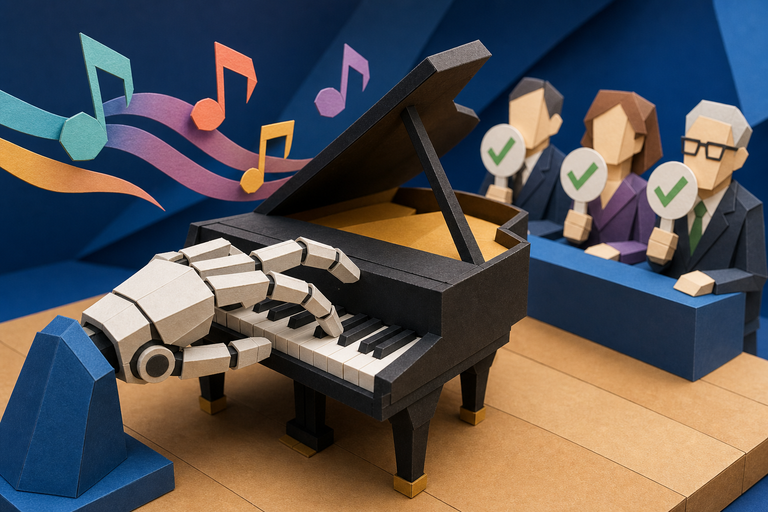
A robotic hand just auditioned as a pianist, and the judges couldn't always tell it wasn't human.
Researchers at USC built a four-fingered mechanical hand that learned to play a melody by ear after just two minutes of random key-pressing. No massive datasets. No exhaustive programming. Just brief, trial-and-error experience, much like how a child learns.
When tested against human pianists in a blind audition, the judges sometimes couldn't distinguish the robot's performance from the humans'.
"The Achilles heel of traditional robotics is the assumption that perfect information is necessary to act well," said researcher Francisco Valero-Cuevas. "Animals don't work that way. They perceive, they guess, usually correctly, and they adapt."
The implications stretch far beyond concert halls. The team envisions the same approach powering exoskeletons that learn a Parkinson's patient's personal movement style, or robots that assist elderly people at home without needing to be pre-programmed for every detail.
"With two minutes of training and a simple laptop, this system learned to do something intrinsically human: artistic expression," Valero-Cuevas said.
SMRTR provides this summary for quick context. The original article belongs to Hacker News.
Read the original article