
$400 exoskeleton suit built from threads and motors delivers lifelike VR feedback
SMRTR summary
A $400 exoskeleton suit that weighs less than eleven pounds can deliver the sensation of lifting virtual objects or feeling an explosion's jolt. The breakthrough challenges decades of bulky, six-figure haptic systems.
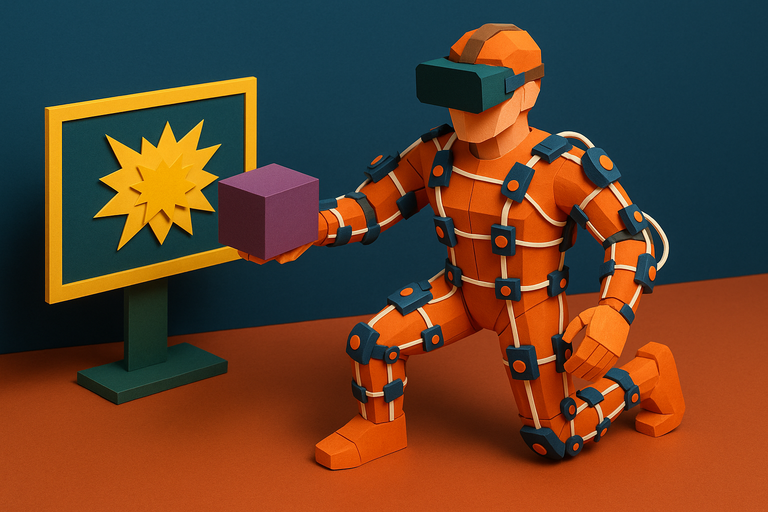
Researchers developed Kinethreads using nylon threads, compact motors, and a Raspberry Pi computer. The suit wraps around the body like a second skin, with synthetic tendons that tighten and contract to guide muscle movement or create resistance.
The design started with arm sleeves before expanding to full-body support. Motors act as motorized reels, generating up to 120 newtons of force through strategic thread placement. Vibration motors provide additional feedback, helping users anticipate available assistance.
For virtual reality applications, ten motorized reels deliver forces ranging from subtle object resistance to powerful impacts. The system generates vibrotactile feedback at up to 200 hertz, creating immersion that traditional VR controllers cannot match.
Users can put on the suit in under 30 seconds, and a lithium-polymer battery provides two hours of active use. Testing showed participants found it comfortable for extended sessions.
The innovation makes muscle-assisting technology and realistic VR feedback accessible to rehabilitation patients and consumers who previously couldn't afford professional-grade exoskeleton systems.
SMRTR provides this summary for quick context. The original article belongs to Interesting Engineering.
Read the original article