
Your Node.js Project is Not Safe (Trust Me, It’s Not)
SMRTR summary
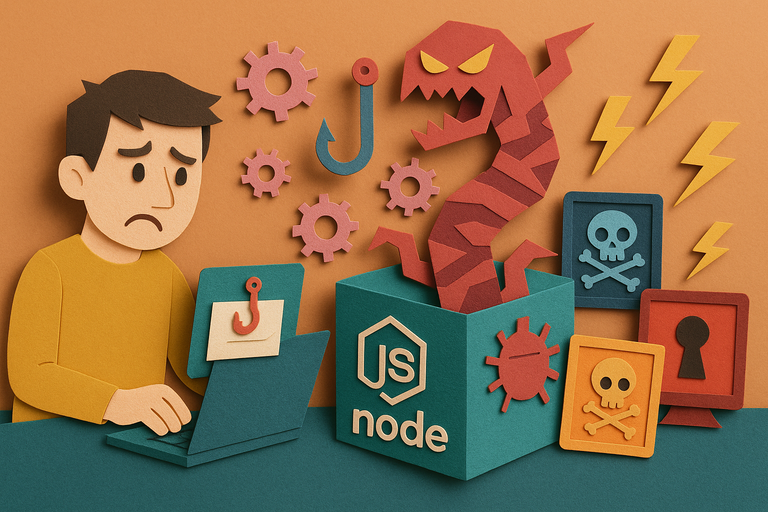
A developer's tired click has unleashed digital chaos across the JavaScript universe. What security researchers are calling "one of the most devastating supply chain attacks in npm history" began when Josh Junon, a key npm package developer, fell victim to a sophisticated phishing email.
"Sorry everyone, I should have paid more attention. Not like me; have had a stressful week," Junon later admitted on Bluesky.
That single mistake compromised 18 widely-used packages with over 2.6 billion weekly downloads. These weren't flashy libraries but the invisible infrastructure holding countless websites together.
Even more alarming, a week later came "Shai-Hulud" – a first-of-its-kind self-replicating worm that infected over 180 packages by automatically using stolen npm tokens to publish malicious versions of any accessible packages.
While the JavaScript community responded remarkably fast – with detection within five minutes and removal within hours – the incident exposes uncomfortable truths about our digital infrastructure.
The evolution from simple malicious packages to sophisticated phishing campaigns to self-replicating worms highlights how quickly attackers are adapting, targeting the very foundation of web development.
SMRTR provides this summary for quick context. The original article belongs to GitConnected.
Read the original article