
Why I Don’t Vibe Code
SMRTR summary
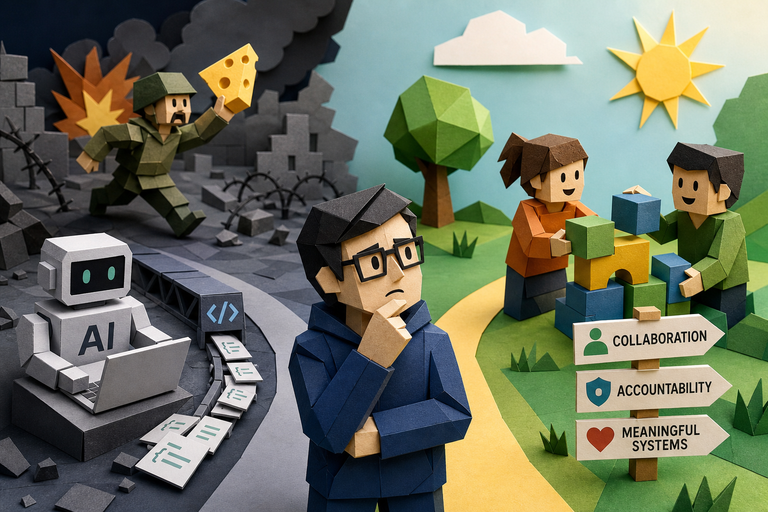
A developer's ancestor once died retrieving cheese from a war zone. That stubborn frugality, it turns out, may be the perfect metaphor for resisting the AI coding revolution.
One veteran software developer makes a quietly compelling case for why he doesn't "vibe code," the trendy practice of using large language models to write software. His reasons range from the practical to the philosophical.
He argues that AI excels at eliminating what theorist Fred Brooks called "accidental complexity," the tedious mechanics of coding. But it stumbles badly at "essential complexity," the hard, messy, deeply human work of designing systems that actually make sense.
He also worries about what gets lost when friction disappears. Struggle, he argues, is how developers learn, and how bad architectural decisions get caught before they become disasters.
Perhaps most pointedly, he warns that the drive for AI-powered velocity often becomes a weapon turned against teammates, replacing collaboration with loneliness, and accountability with a shrug.
SMRTR provides this summary for quick context. The original article belongs to Daily.dev.
Read the original article