
What's the Point of Learning Functional Programming?
SMRTR summary
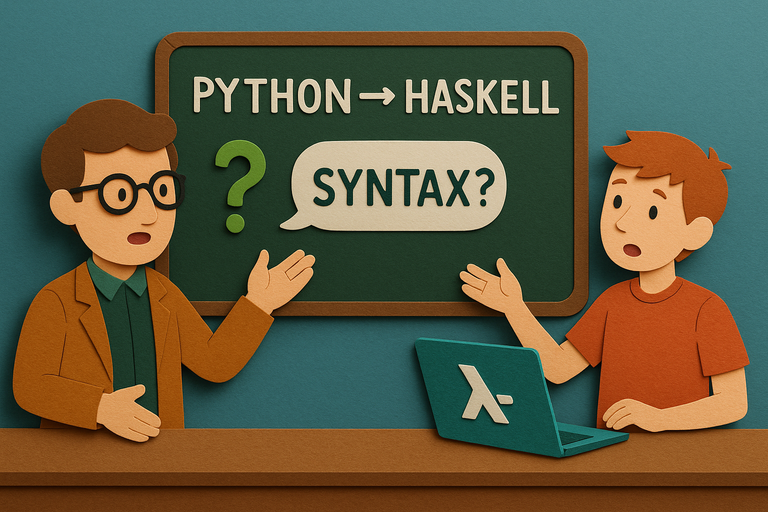
A computer science teaching assistant discovered the pitfall of making functional programming too easy when a student asked, "If all we did was write some Python in Haskell syntax, what's the point of learning functional programming?" The question came after the instructor had given students an "escape hatch" to convert familiar Python loops into Haskell's tail recursion for a knight's tour chess problem. Realizing this mechanical translation missed the real lessons, the instructor developed a radically different approach using "wholemeal programming" that generates an entire solution space at once rather than exploring it step by step. This functional approach leverages Haskell's laziness to create potentially infinite lists without memory overflow, forces explicit thinking about state spaces, and creates modular code where stopping conditions can be separated from exploration logic. The result demonstrates how functional programming teaches laziness as a conceptual tool, improves code modularity and composition, and fundamentally changes how programmers approach problem-solving beyond just syntax differences.
SMRTR provides this summary for quick context. The original article belongs to Daily.dev.
Read the original article