
What Happens During a Production Deployment? A Behind-the-Scenes Guide
SMRTR summary
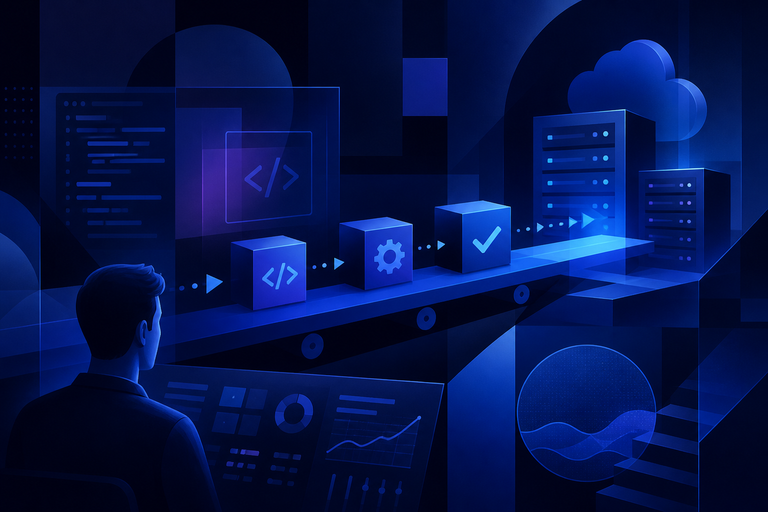
Every time a developer pushes code, an invisible chain of machinery springs into motion: builds, health checks, traffic shifts, rollbacks. For years, engineering teams built and maintained that chain themselves. Now, a growing argument suggests they probably shouldn't.
The case is straightforward. Custom deployment pipelines consume on-call rotations, sprint capacity, and 2 a.m. attention. Platform-as-a-service tools handle the heavy lifting, from freezing artefacts and running health checks to executing zero-downtime rolling updates and one-click rollbacks.
But the argument isn't universal. Regulated industries, companies that actually sell deployment infrastructure, and teams running genuinely unusual workloads like GPU clusters or hardware-in-the-loop systems may have legitimate reasons to stay hands-on.
For everyone else, the math is hard to ignore. As one sharp observation puts it: "We built our own deployment system is not a badge of honour anymore. It is an admission that your team maintains a second product with no customers."
Knowing how the pipeline works remains essential. Owning it, for most teams, no longer is.
SMRTR provides this summary for quick context. The original article belongs to Hacker Noon.
Read the original article