Vibe Coding Won’t Replace Humans Anytime Soon, Data Shows
SMRTR summary
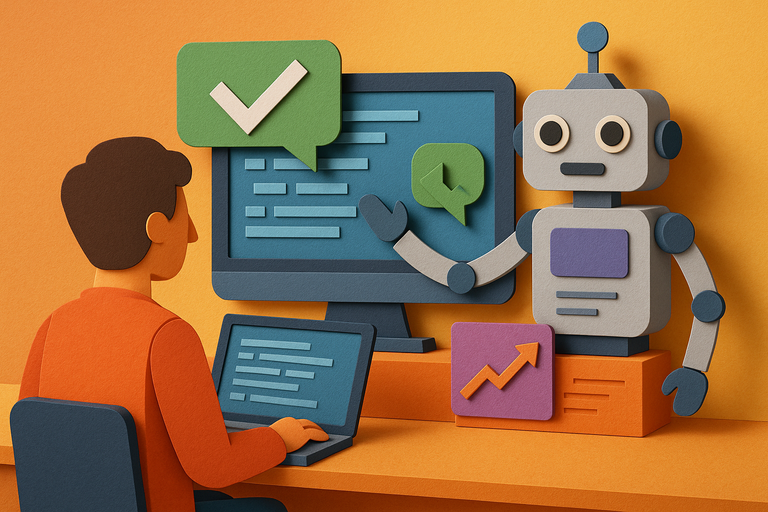
Autonomous coding agents can now build entire applications from scratch, but strip away human oversight and their performance crumbles dramatically. New research reveals a 53% drop in code accuracy when developers step back from the process.
The study, aptly titled "A Survey of Vibe Coding with Large Language Models," exposes a critical flaw in AI's march toward programming independence. These systems excel at generating code within controlled environments but lose their way without human guidance and context.
"These systems can perform multi-step reasoning, but without structured feedback, they fail to distinguish correctness from plausibility," the researchers found.
The term "vibe coding" describes this emerging practice of prompting AI models in natural language to write complete applications. Yet the promise of hands-off development remains elusive.
Major companies like Walmart aren't replacing programmers with AI agents but creating hybrid roles instead. These "agent developers" train and supervise coding systems while maintaining critical human judgment for compliance and security.
The research suggests a future where developers become conductors of AI orchestras rather than obsolete musicians, managing context and validation while machines handle the heavy lifting of code generation.
SMRTR provides this summary for quick context. The original article belongs to PYMNTS.
Read the original article